
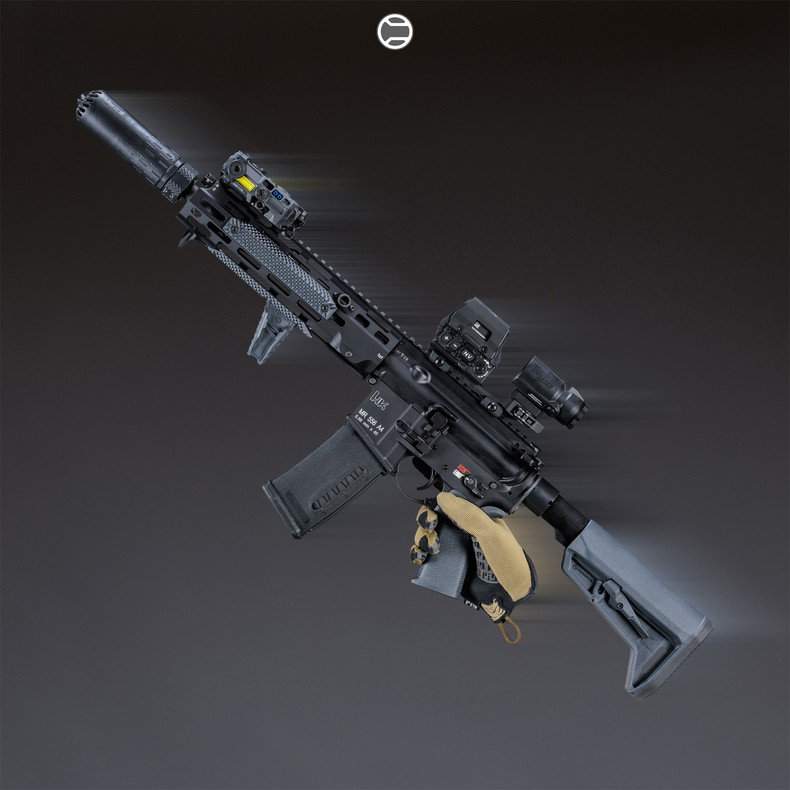
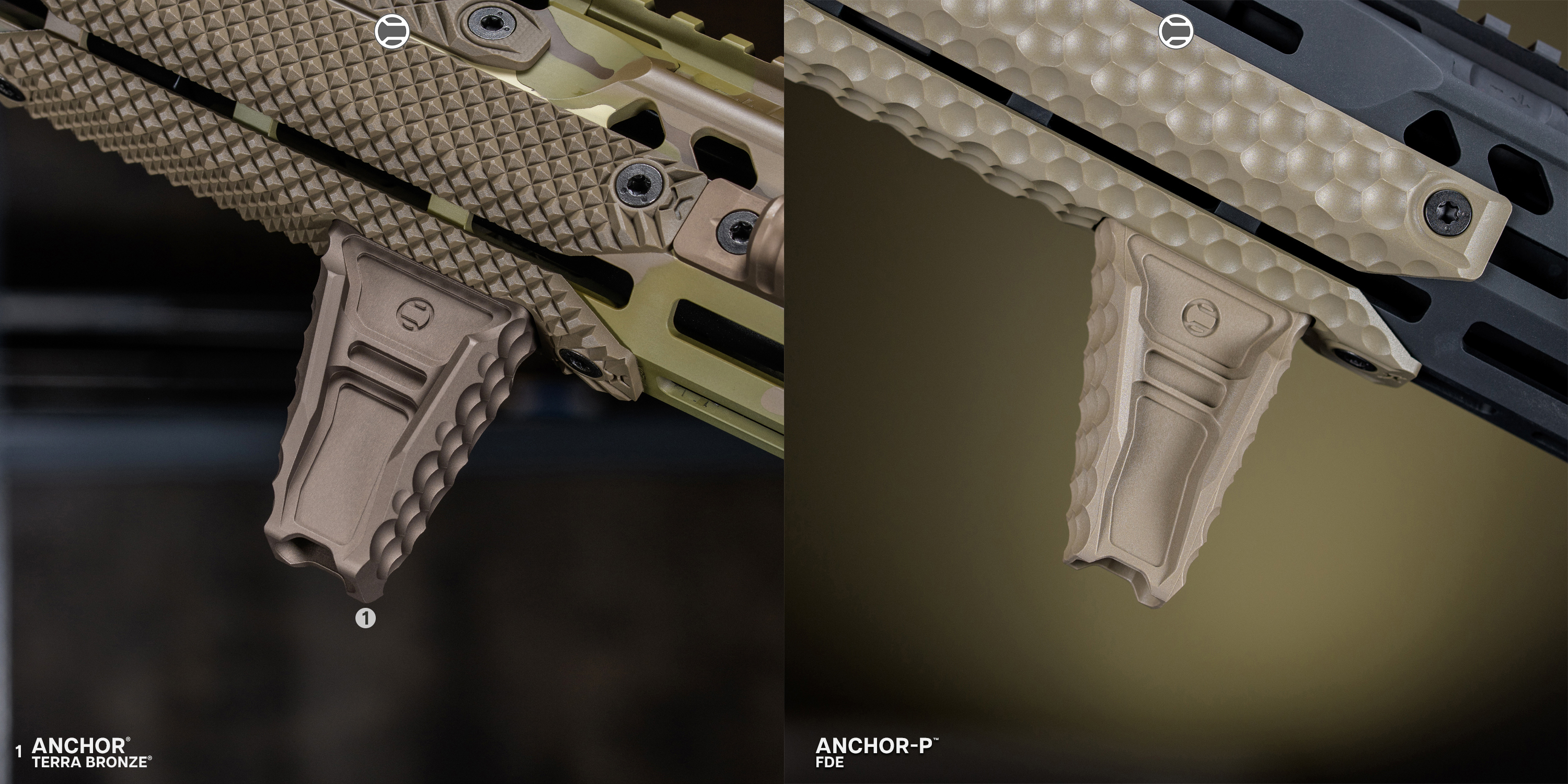
Selecting the right forward control for your rifle handguard is essential for establishing a repeatable grip, managing muzzle climb, and driving target transitions. Within the RailScales® ecosystem, the Anchor® series stands out as a premier multi-angle hybrid foregrip. Designed with a reversible footprint, it gives shooters the choice between a 90-degree vertical stance and a 70-degree angled stance on a single accessory.
However, choosing between the original billet aluminum Anchor® and the High-Temp Polymer Anchor-P™ comes down to balancing construction materials, weight, and your overall build budget.
What Is the Difference Between the Anchor® and Anchor-P™?
While both foregrips share identical dual-angle ergonomics, bi-directional functionality, and mounting geometry, their primary difference lies in their material construction and manufacturing process:
• The Anchor®: CNC-machined from a solid block of 6061-T6 billet aluminum and finished with Type III hardcoat anodizing for extreme duty use and maximum structural shear strength.
• The Anchor-P™: Injection-molded from a glass-filled High-Temperature Polymer blend, engineered to offer a featherweight, cost-effective alternative that excels under intense barrel heat.
Key Differences in Construction, Weight, and Design
| Feature/Spec | The Anchor (Aluminum) | The Anchor-P (Polymer) |
| Material | 6061-T6 Billet Aluminum | High-Temp Glass-Filled Polymer |
| Finish | Type III Hardcoat Anodized | Textured Injection Molded |
| Reversible Angles | 90° Vertical / 70° Angled | 90° Vertical / 70° Angled |
| Footprint | 1 M-LOK Slot | 1 M-LOK Slot |
| Primary Advantage | Maximum Impact & Shear Strength | Featherweight Savings & Insulated Value |
Aluminum vs. Polymer: Which Material Makes More Sense?
Deciding which material suits your setup depends on your primary performance objectives:
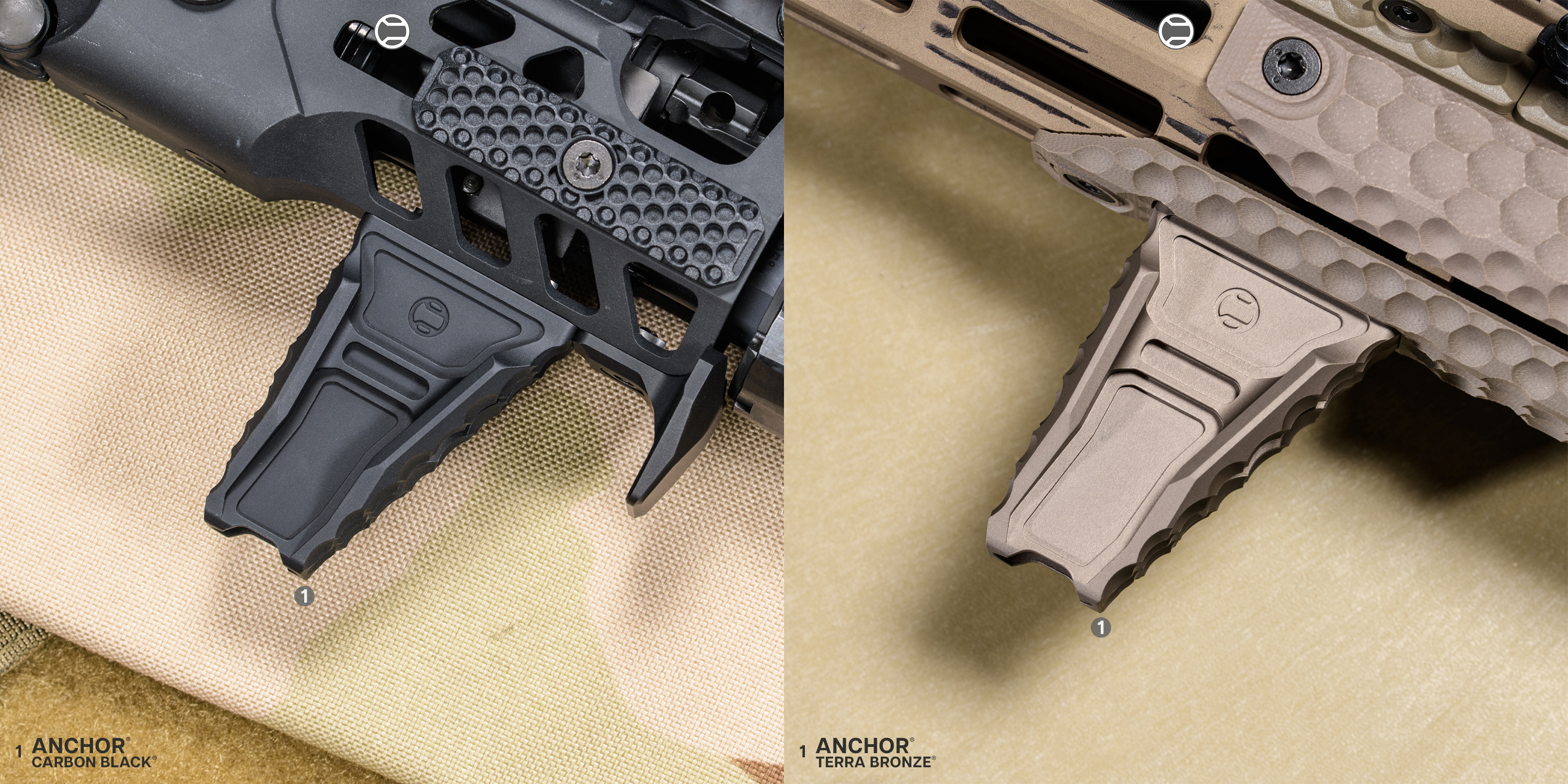
When the Aluminum Anchor® Makes the Most Sense
• Hard-Use Duty & Barrier Driving: If you frequently brace your foregrip directly against barricades, steel edges, or hard structural obstacles, the aluminum Anchor® provides maximum shear resistance and impact durability.
• Premium Anodized Aesthetics: Machined aluminum allows for crisp, deep texture cuts and high-end anodized finishes like Terra Bronze or Carbon Black that perfectly complement custom rifle builds.
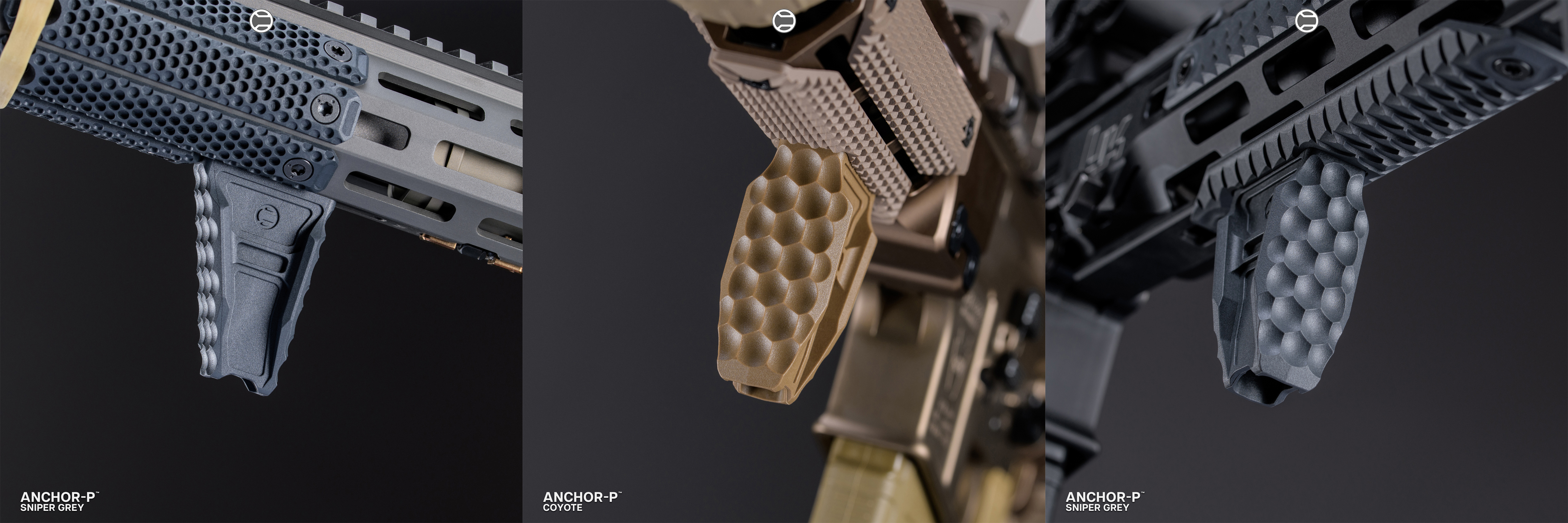
When the Polymer Anchor-P™ Is the Better Choice
• Hyper-Lightweight & Compact Builds: Every gram added to the far end of the barrel increases support-arm fatigue. The Anchor-P™ sheds critical fractions of an ounce, making it ideal for lightweight carbines or compact PCC setups.
• Thermal Insulation: Unlike aluminum, polymer acts as a natural insulator. It will not transfer barrel heat directly into your hands during high-volume range sessions, nor will it feel ice-cold in extreme winter environments.
• Maximum Value: It delivers the exact same ergonomic C-clamp leverage as the original metal Anchor® at a significantly lower price point.
How Grip Angle and Positioning Compare
Both foregrips feature RailScales' reversible design, allowing you to tailor your support-hand positioning to your specific shooting style:
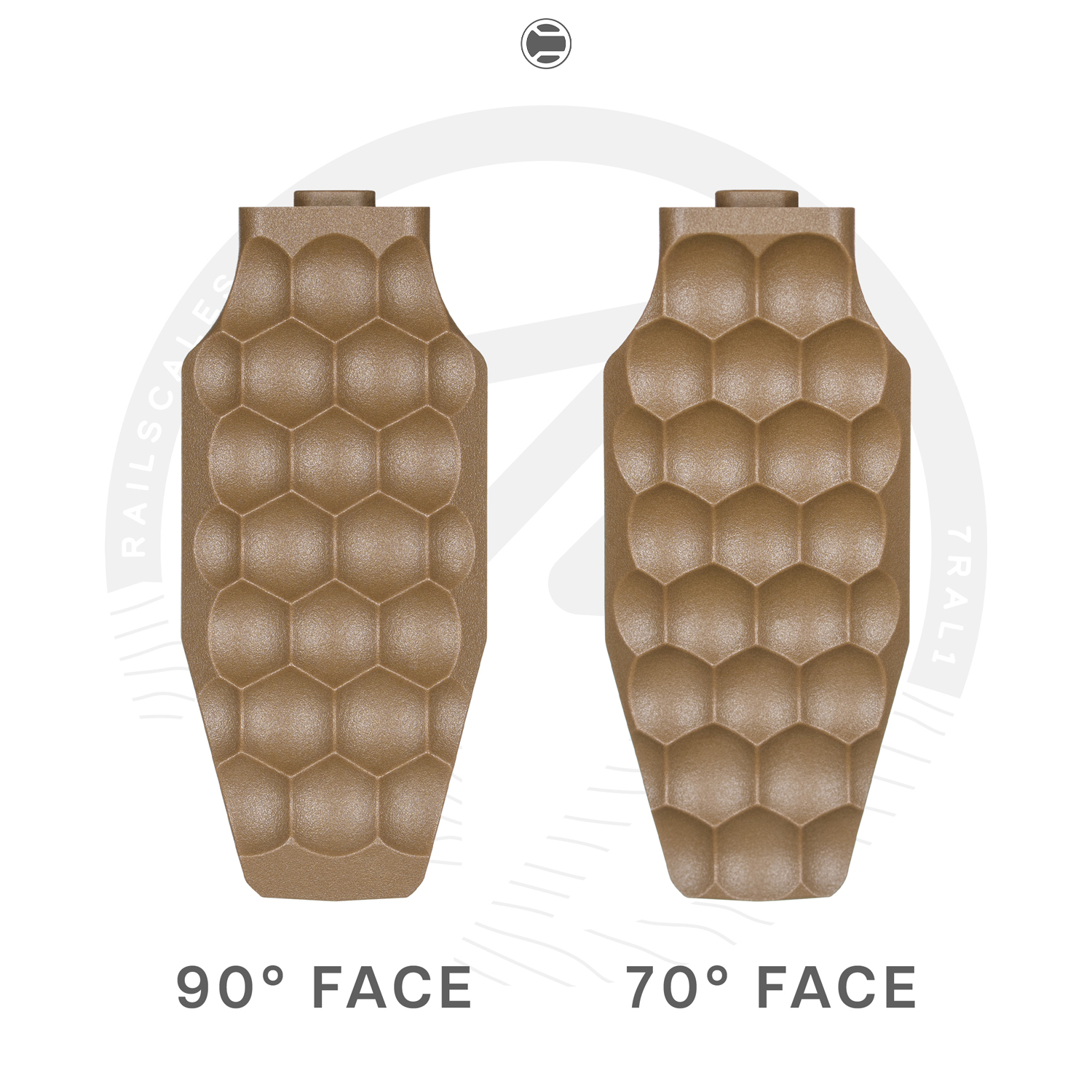
• 70-Degree Angled Stance: Position the angled face toward the shooter to match the natural anatomical slope of a relaxed wrist. This angle is ideal for a thumb-over-bore C-clamp grip, giving you maximum rearward leverage to pull the rifle firmly into your shoulder pocket.
• 90-Degree Vertical Stance: Flip the grip 180 degrees on the rail to utilize the flat vertical face. This stance provides a traditional index barrier for driving the muzzle aggressively between targets during rapid lateral transitions.
Comparing the Anchor® Series to Other RailScales® Controls
To fully understand where the Anchor® and Anchor-P™ fit into your handguard setup, it helps to compare them alongside RailScales' other flagship forward controls:
The Karve® Series: Minimalist Bi-Directional Indexing
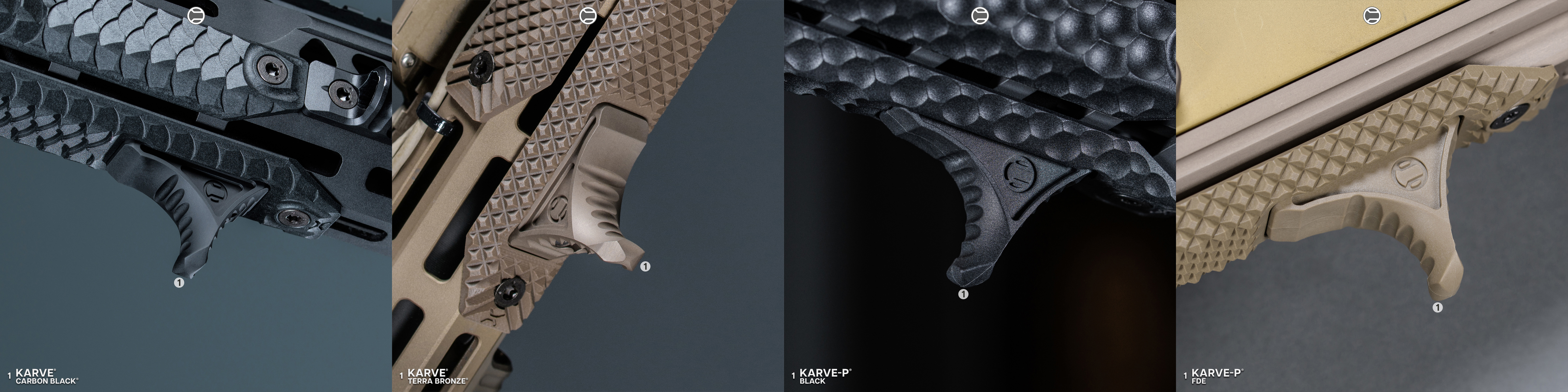
While the Anchor® series offers a hybrid grip interface with distinct vertical and angled faces, the Karve® (Aluminum) and Karve-P® (High-Temp Polymer) are engineered for shooters who want the absolute smallest footprint possible.
• Form Factor: The Karve® populates a single M-LOK slot and weighs a fraction of an ounce, functioning as a lightweight handstop rather than a foregrip.
• Operational Style: Designed primarily to anchor your support hand into a tight C-clamp grip or prevent your hand from slipping forward toward a hot muzzle, making it ideal for hyper-lightweight builds where rail space is extremely limited.
The RSB® Series: Compact Vertical Control
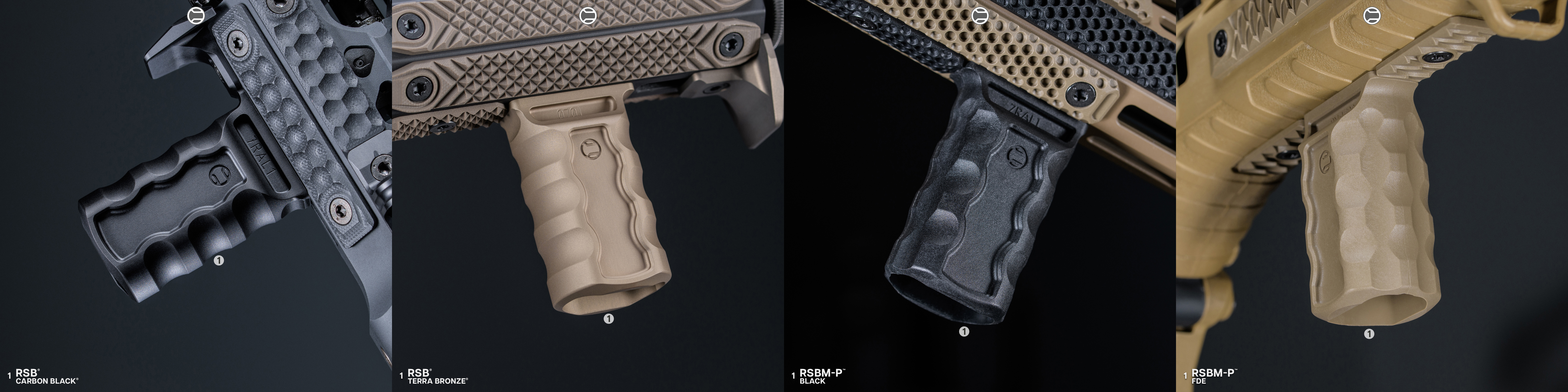
For shooters who prefer a traditional vertical grip interface over an angled setup, the RSB® (Aluminum) and RSBM-P™(High-Temp Polymer) deliver a streamlined, stubby vertical profile.
• Form Factor: Featuring a shortened, hollowed vertical body, the RSB® provides full vertical leverage without the unwieldy length of legacy vertical grips.
• Operational Style: Unlike the dual 90°/70° angles of the Anchor® series, the RSB® focuses on delivering a direct 90-degree interface to drive the rifle during rapid lateral target transitions, while keeping overall front-end weight and snag hazards to an absolute minimum.
Comparing Compatibility With M-LOK and XOS-H® Rails
Seamless integration into your existing rail setup is vital for a smooth, snag-free handguard profile:
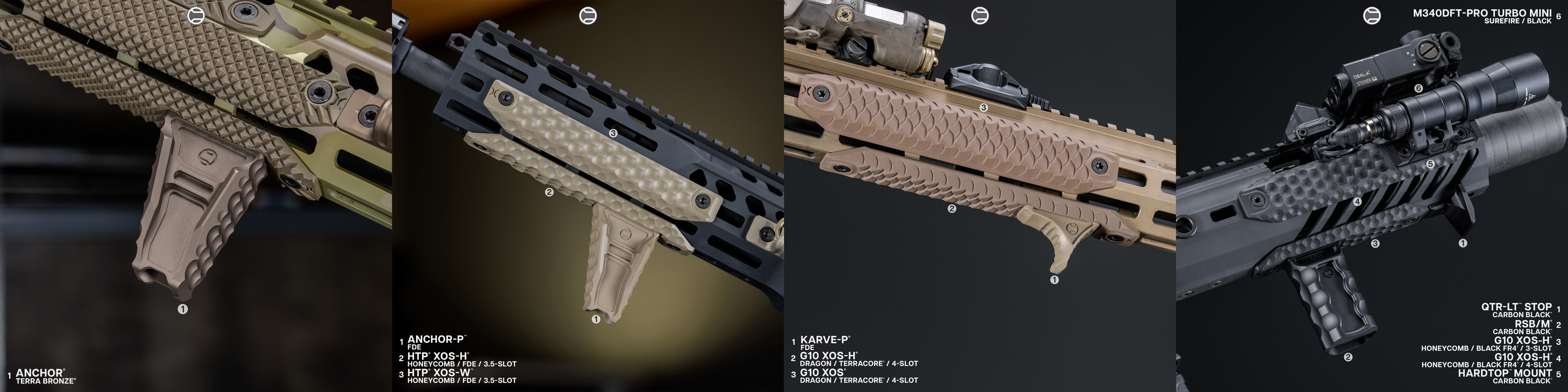
• XOS-H® Scale Nesting: Both the Anchor® and Anchor-P™—alongside the Karve®, Karve-P®, RSB®, and RSBM-P™—integrate flawlessly into wrap-around 3-sided XOS-H® Scales. The standardized cutout on the XOS-H® cradles the foregrip flush within the G10 scale matrix, eliminating gaps and creating a continuous 180-degree thermal barrier along your rail.
Which RailScales Foregrip Should You Buy?
Both options deliver unmatched control, reduced wrist fatigue, and superior muzzle indexing. If you require ultimate, duty-grade aluminum rigidity for hard-use environments, invest in the original Anchor®. If your goal is to minimize front-end build weight and protect your budget while retaining dual-angle leverage, the Anchor-P™ is the ideal choice for your AR-15.
Frequently Asked Questions About Anchor® and Anchor-P™ (FAQ)
Q: Is the polymer Anchor-P™ durable enough for rapid firing and barrier bracing?
A: Yes. The Anchor-P™ is molded from a high-density, glass-filled polymer explicitly formulated to tolerate severe thermal heat, impact, and hard recoil without cracking or warping.
Q: Can I use the Anchor® or Anchor-P™ on an AR pistol build?
A: Because both models feature a distinct 70-degree angled face and hybrid profile, many shooters prefer their geometry for compact builds. However, you should always verify the latest federal, state, and local regulations regarding foregrip classifications on pistol platforms.
Q: How does the Anchor® series help with heat management on slim handguards?
A: By providing a dedicated control surface, the foregrip elevates your hand slightly off the rail surface. Pairing either the Anchor® or Anchor-P™ with G10 RailScales® creates an insulated barrier that completely shields your hand from gas block radiation.
Q: Should I choose the Anchor® or the Karve® for a short-barreled rifle (SBR)?
A: If you prefer a fuller handhold with multiple wrist angle options, the Anchor® or Anchor-P™ is ideal. If rail space is extremely tight and you only need a physical barrier to keep your hand safely behind the muzzle, the minimalist Karve® or Karve-P® is the lighter, more compact choice.
Q: Do the Karve® and RSB® also nest inside XOS-H® wrap-around scales?
A: Yes. The XOS-H® scale matrix features a standardized accessory cutout designed to cradle the Karve®, Karve-P®, RSB®, RSBM-P™, Anchor®, or Anchor-P™ flush against the rail surface for a completely seamless, heat-resistant grip zone.
Disclaimer:
This blog content was generated by a human and with the aid of artificial intelligence. It may contain errors or inaccuracies and should not be relied upon as a substitute for professional advice. This content is for SEO/entertainment purposes only and the views expressed in this content does not necessarily reflect the views of RailScales LLC. For more information, please refer to bullet point #14 on our FAQ.