
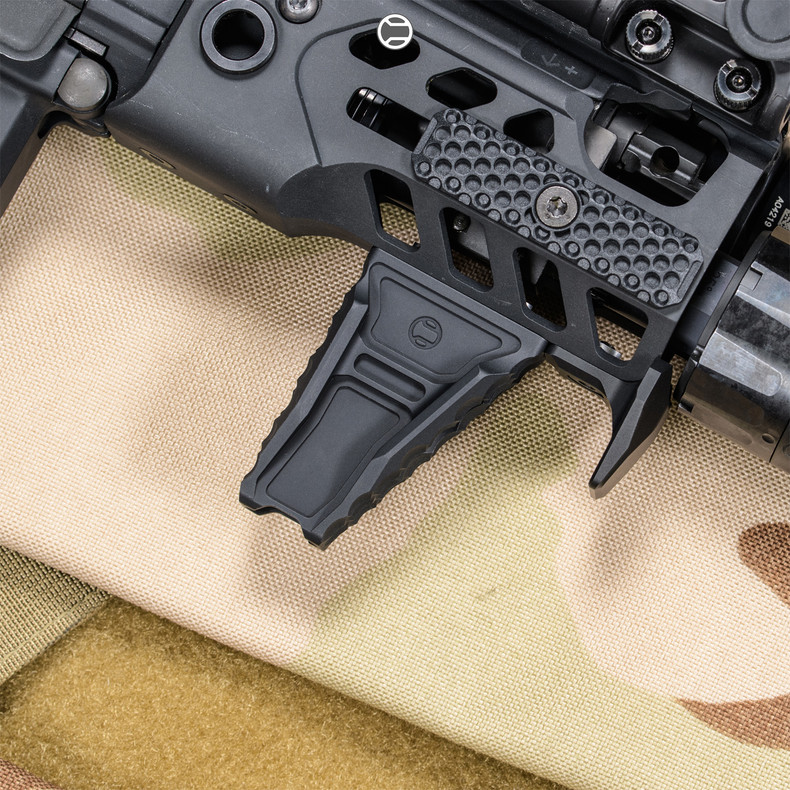
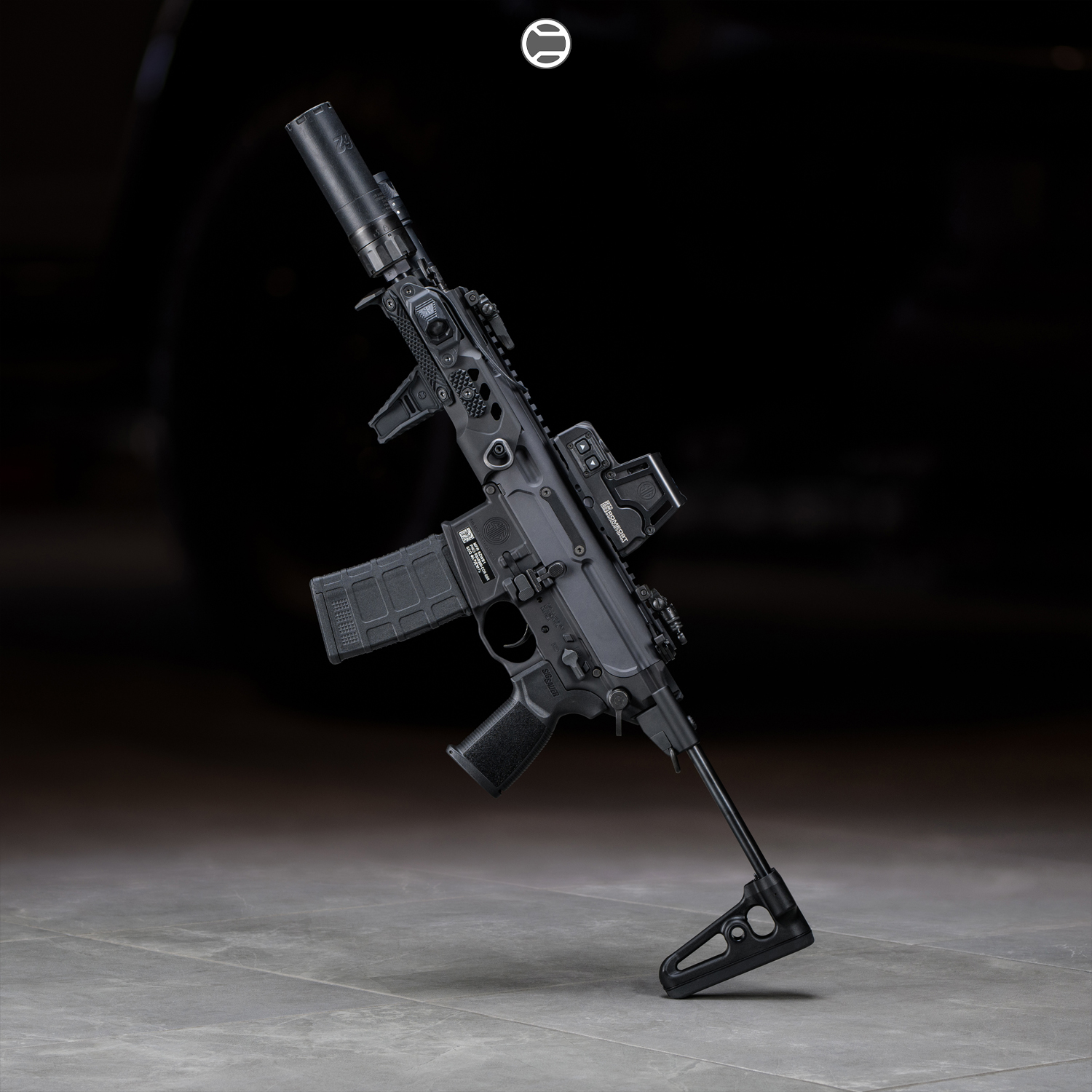
The ergonomics of the modern rifle have evolved significantly beyond basic vertical sticks and smooth handguards. As shooters continue to push the boundaries of speed, recoil management, and dynamic movement, the hardware interfacing their support hand with the rifle has adapted. Enter the multi-angle foregrip—a modern class of rifle control accessories engineered to maximize leverage, minimize fatigue, and redefine weapon handling.
What Is a Multi-Angle Foregrip on an AR-15?
A multi-angle foregrip is a forward control accessory that abandons the rigid, single-profile constraint of traditional vertical grips. Instead of presenting a uniform 90-degree handle, these advanced components utilize multi-angle grip designs featuring distinct, sloping faces or reversible geometry.
Why Multi-Angle Grip Design Changes Rifle Handling
By offering multiple angles on a single accessory, a shooter can change how they apply driving pressure to the handguard. Rather than just holding the rifle, a multi-angle profile allows you to simultaneously pull back into your shoulder pocket and pull down to fight muzzle rise, drastically improving weapon control and presentation consistency.
Ergonomics: Support-Hand Positioning and Natural Wrist Alignment
Traditional vertical grips often force the support hand into an unnatural, fully vertical wrist orientation. Over extended training loops or structural operations, this positioning places immense stress on the wrist and forearm tendons, accelerating support-hand fatigue.
The Evolution of the C-Clamp Shooting Style
Modern tactical shooting relies heavily on the thumb-over-bore C-clamp technique. Multi-angle foregrips act as the perfect mechanical foundation for this stance. The angled faces align naturally with the natural geometry of a relaxed human hand, allowing shooters to establish an incredibly tight C-clamp grip without forcing the wrist into a harsh, fatiguing angle.
Why Low-Profile Designs Improve Maneuverability
By keeping the overall profile of the multi-angle grip compact and close to the rail system, the weapon maintains a streamlined center of gravity. This low-profile nature minimizes bulk, allowing the rifle to navigate tight spaces, vehicle interiors, and barricades without creating snag hazards.
Performance Advantages During Rapid Fire and Movement
When operating under stress, fast target transitions and shot-to-shot recovery dictate success. The primary performance advantage of modern multi-angle foregrips boils down to two critical factors: mechanical leverage and repeatable hand indexing.
The Role of Hand Indexing in Faster Target Transitions
A multi-angle grip serves as a definitive tactile map for your support hand. When snapping the rifle up from a low-ready position, your hand instantly keys into the exact same spatial location every single time. This precise indexing eliminates fumbling and allows you to drive the muzzle from target to target with absolute authority.
Recoil Control and Stability
During high-volume rapid fire, muzzle climb is inevitable. Because a multi-angle foregrip distributes the rearward and downward pressure across a broader surface area of your hand, it dampens the physical recoil pulse far more effectively than a standard grip. The result is a flatter-shooting rifle that settles back onto target instantly.
Optimizing Placement Along the Rail System
Achieving total thermal and mechanical control requires an intentional accessory selection strategy. A multi-angle grip shouldn’t sit on your rail in isolation; it functions best when integrated into a unified handguard ecosystem.
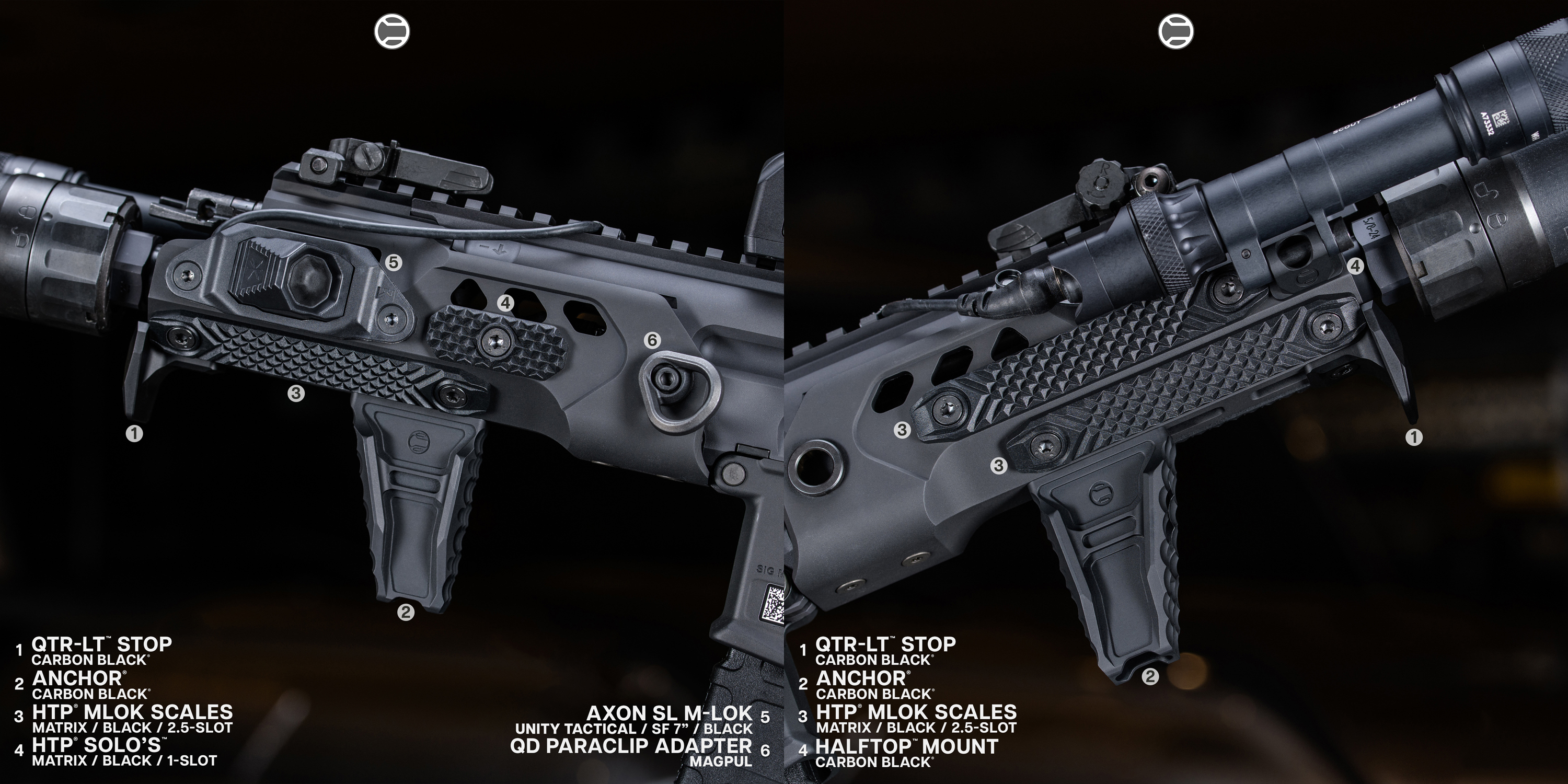
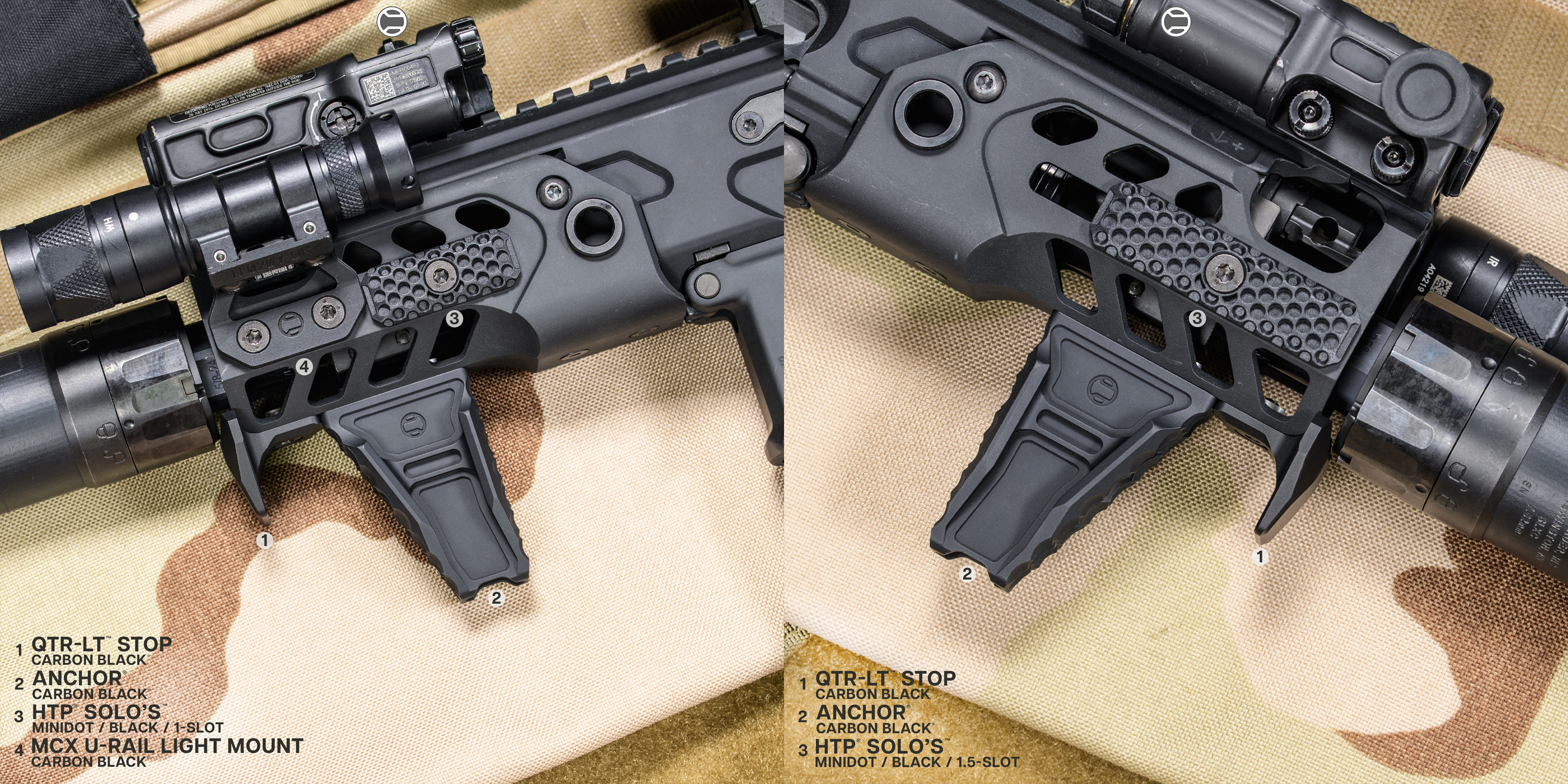
• Customized Placement: Position your multi-angle grip along your M-LOK or Picatinny rail system exactly where your arm naturally extends into a comfortable, slight bend. Placing it too far forward overextends the shoulder; placing it too far back crowds your workspace.
• Combining Grip Components: For peak efficiency, combine your multi-angle grips with dedicated rail covers and independent hand stops. Setting up these pre-built layouts provides comprehensive heat mitigation and texturing across every square inch of your primary grip surface.
RailScales® Multi-Angle Grip Accessories
RailScales® has spent over a decade perfecting the thinness, material strength, and ergonomics of premium rifle controls. Our multi-angle ecosystem is engineered specifically to maximize speed and stability:
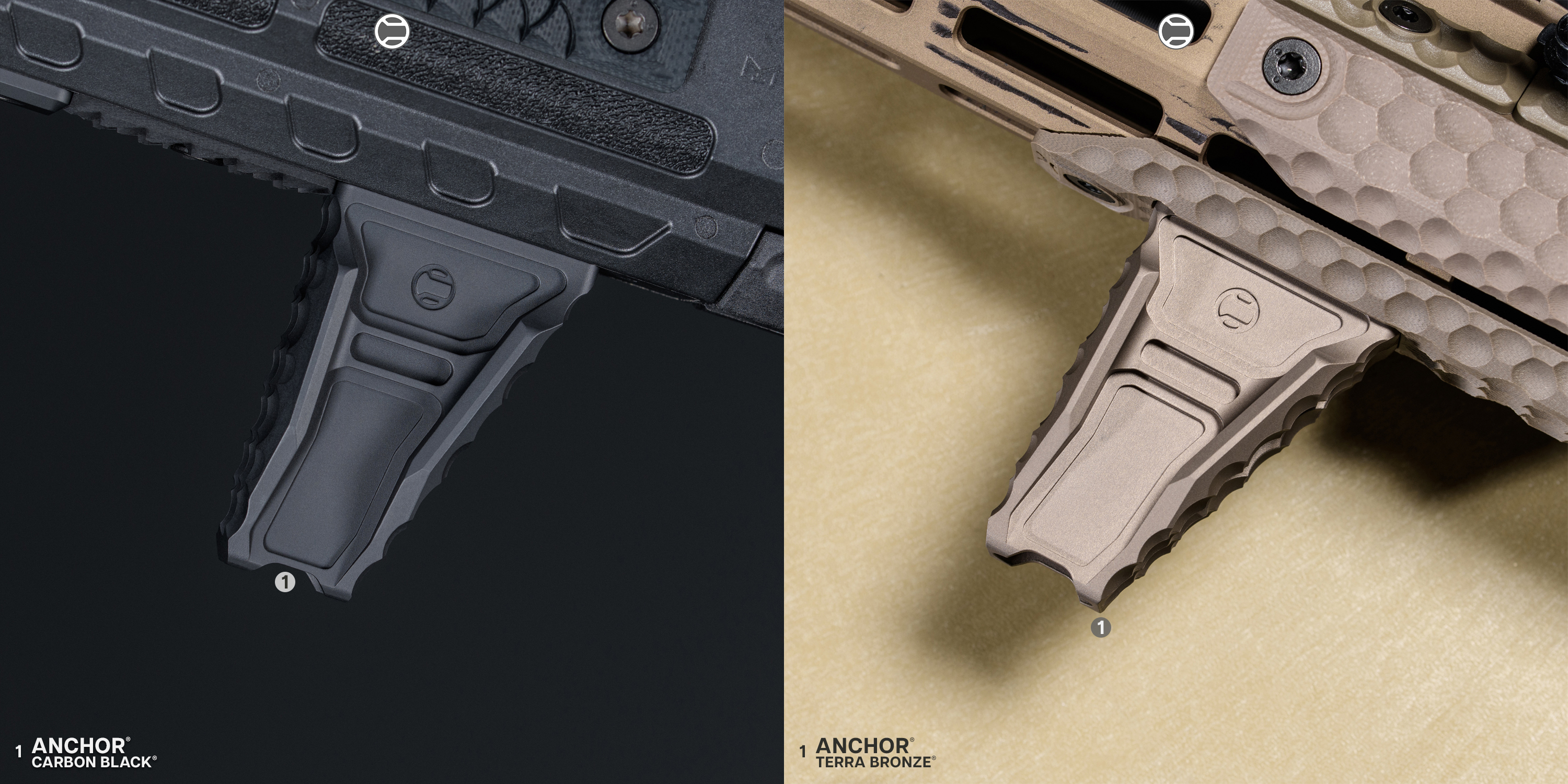
• The Anchor®: Our flagship multi-angle hybrid foregrip machined from premium 6061-T6 aluminum. It features a brilliant, reversible dual-angle design—mount it one way for a rock-solid 90-degree vertical stance, or flip it 180 degrees to utilize a highly ergonomic 70-degree angled face.
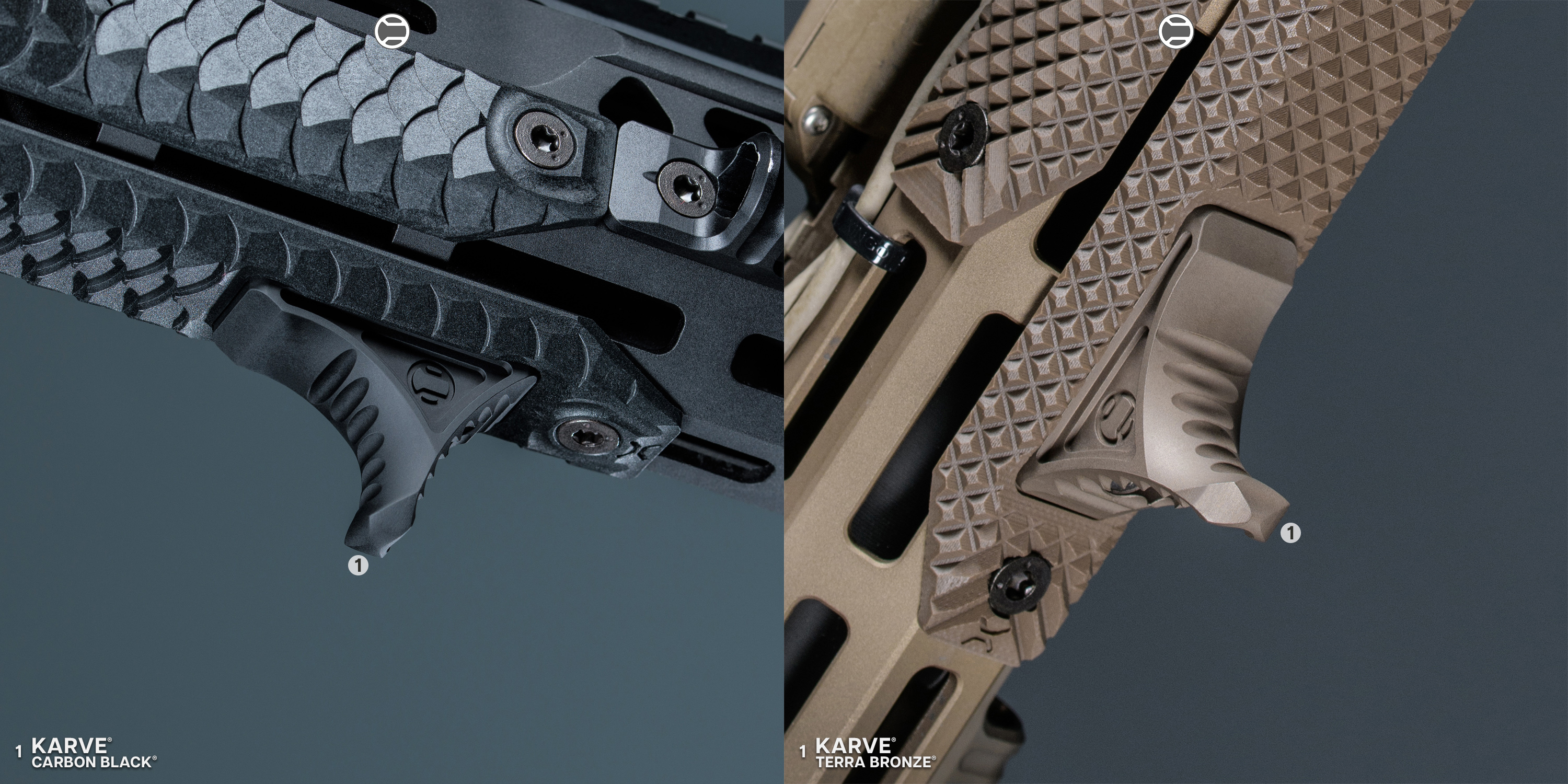
• The Karve®: Our premium bi-directional handstop provides a low-profile indexing point for thumb over bore style shooters, and can also be used in the reverse configuration to provide a barricade stop, and can even be used in conjunction with an Anchor for multi-functional use.
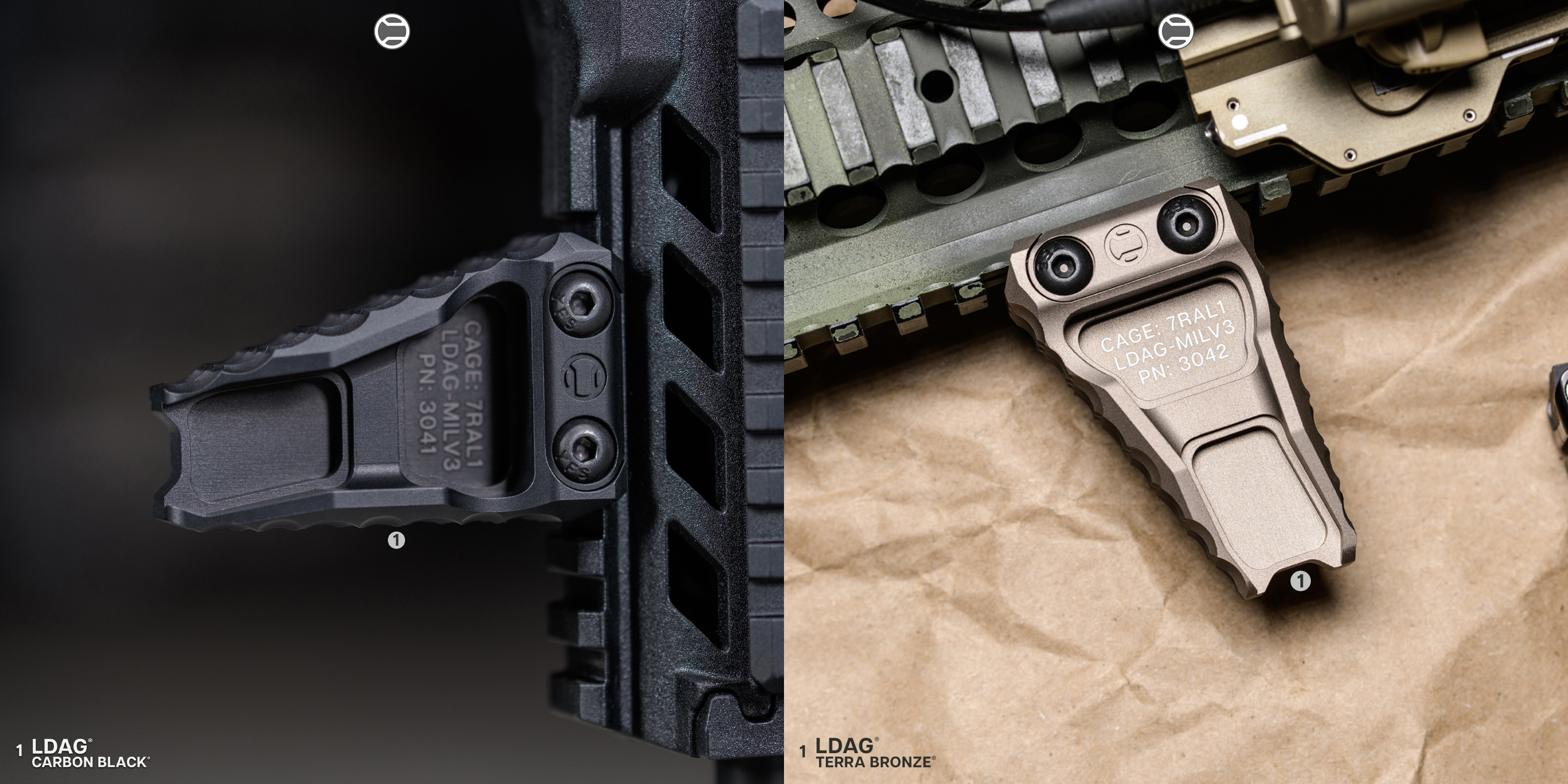
• The LDAG®: Designed for ultra-high-performance Picatinny rail integration, this lightweight, multi-angle control piece features aggressive texturing and alternative indexing faces to anchor your C-clamp grip perfectly.
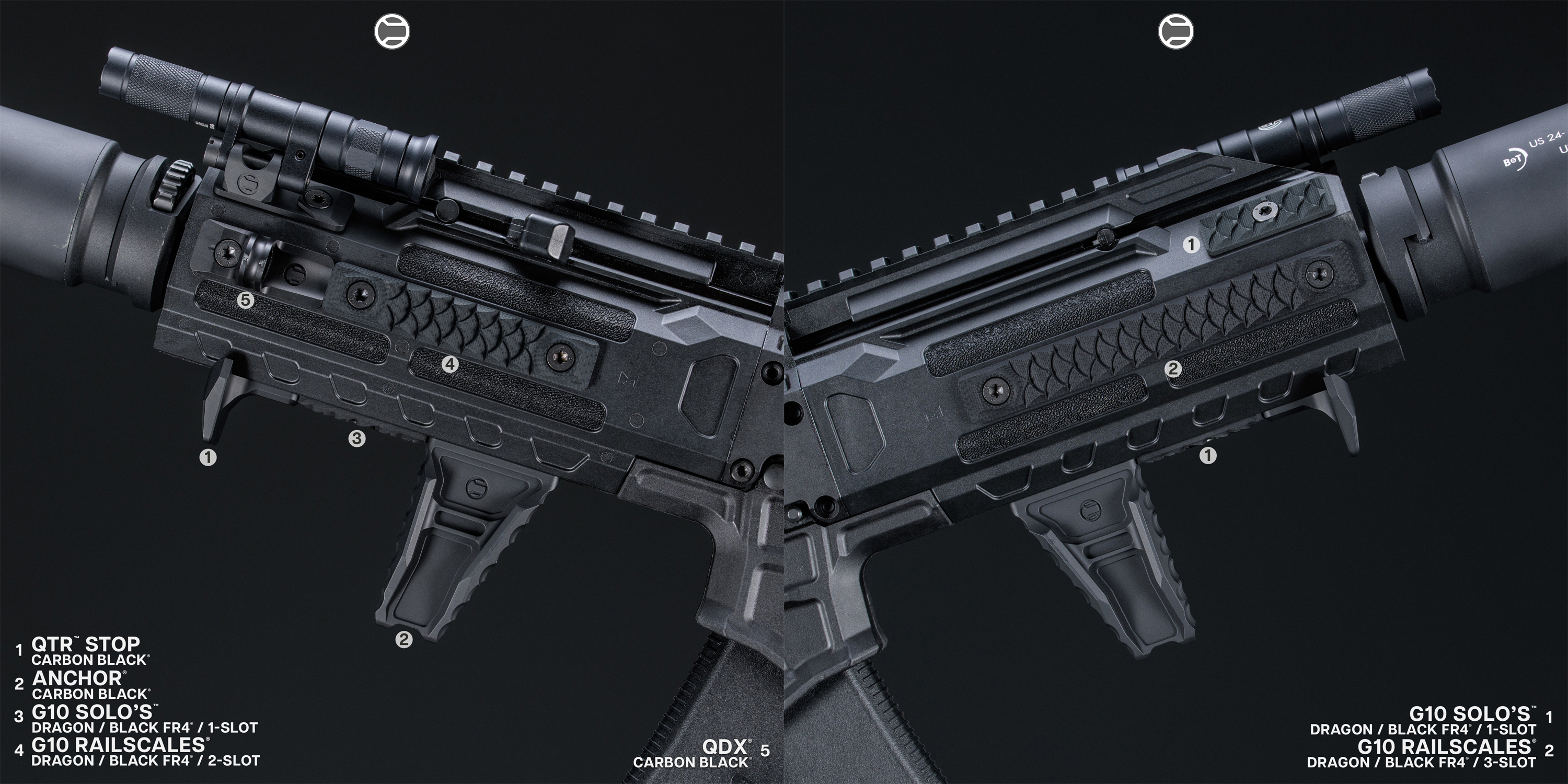
• G10 RailScales®: To complete your multi-angle layout, our CNC-machined G10 panels provide industry-leading heat shielding and friction, allowing you to build a cohesive, temperature-insulated set around your Anchor® or LDAG®.
Frequently Asked Questions About Multi-Angle Grips (FAQ)
Q: What makes a multi-angle grip better than a traditional vertical foregrip?
A: Traditional vertical grips can force your wrist into awkward, straining angles that cause early fatigue. Multi-angle grips offer alternative faces that match the natural slope of your hand, lowering wrist tension while providing better leverage to pull the rifle into your shoulder.
Q: How does a multi-angle grip help with rapid target transitions?
A: It serves as a consistent tactile indexing point. Because your hand locks into the exact same position every time you shoulder the rifle, your muscle memory can drive the gun between targets faster and with less over-muscling.
Q: Do I need to remove my rail covers to mount an M-LOK multi-angle grip?
A: Not necessarily. RailScales® products are designed to be entirely modular. Our specialized XOS-H™ scales feature built-in cutouts that allow our forward controls to sit flush and nested right inside the scale matrix for a seamless, snag-free finish.
Disclaimer:
This blog content was generated by a human and with the aid of artificial intelligence. It may contain errors or inaccuracies and should not be relied upon as a substitute for professional advice. This content is for SEO/entertainment purposes only and the views expressed in this content does not necessarily reflect the views of RailScales LLC. For more information, please refer to bullet point #13 on our FAQ.