

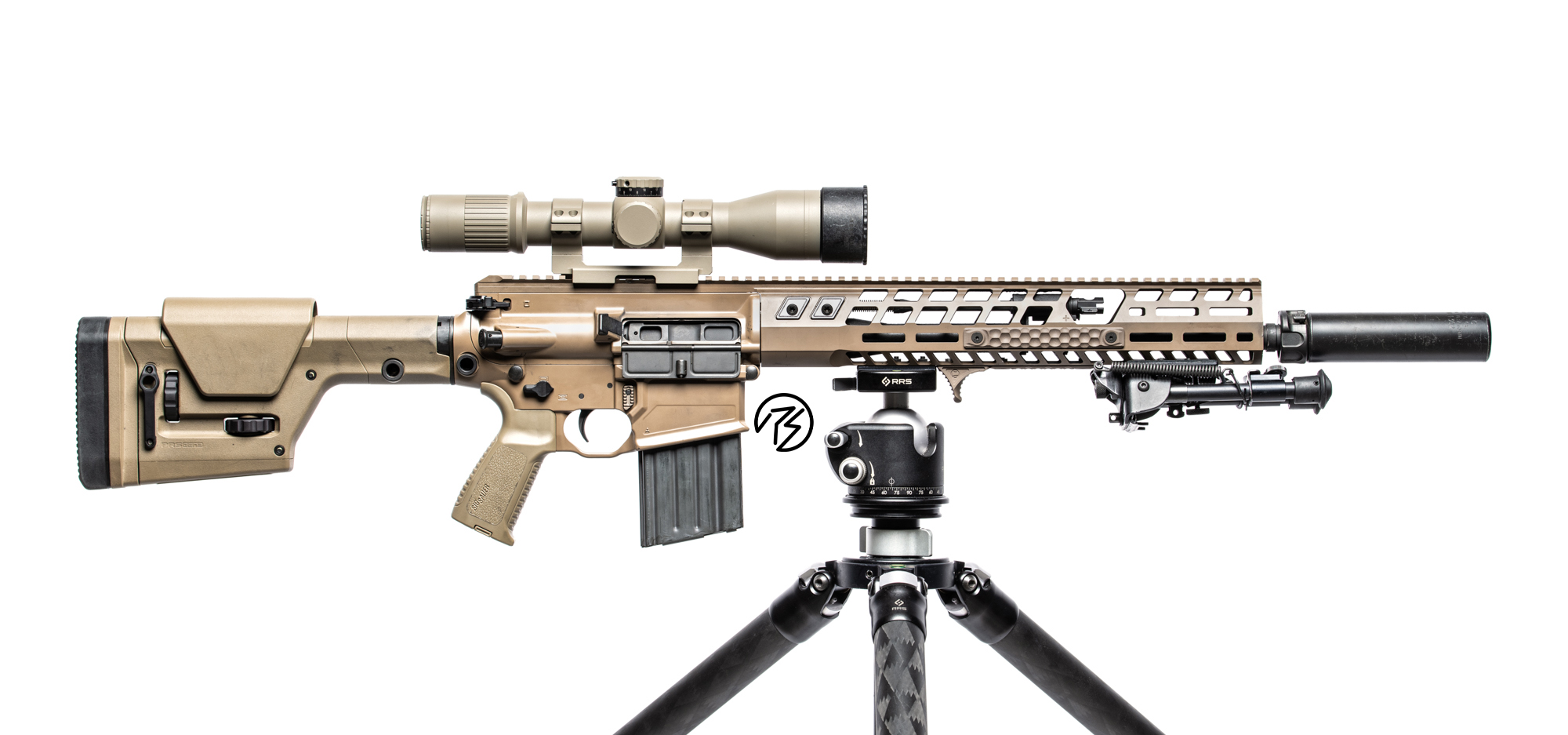
There’s no denying that the AR-15 community loves to debate minutia: Is .223 or 5.56 better? Is .300 Blackout really the next big thing? From upper to lowers and everything in between, you can find something to quibble about on an AR. One of the lasting great debates in the community, however, has been the discussion of the two main operating systems: gas piston and direct impingement.
Proponents on both sides of the debate will throw around loose facts, anecdotal evidence and design specs all day long in ardent defense of their preferred operating system. We’re here to cut through some of the rhetoric and offer a breakdown of these two systems, and help you to decide which operating system is going to be the right one for you.
What Does the Operating System of an AR-15 Do?
For some, this might seem like a simple question. But for those new to the AR platform or who are building their first AR rifle, even the question of what an operating system is and how it works may not be clear.
Essentially, the operating system of your rifle is responsible for moving a new round into the chamber after the last round is fired. The propellants within each cartridge create a high-pressure gas that forces the round out of the end of the barrel, and some of that gas is diverted to operate the mechanism of the rifle.
When they work in harmony, you can send round after round down range without issue. Indeed, the entire design of the AR-15, developed by Eugene Stoner, was framed around the routing and flow of gas within the rifle. But just because it’s the original design doesn’t mean it can’t be improved, hence the development of the direct impingement system. But is it actually better? While both the gas piston and DI systems accomplish the same goal, they don’t do it in the same way. There are design differences to each of them that offer advantages and disadvantages.
The Direct Impingement System
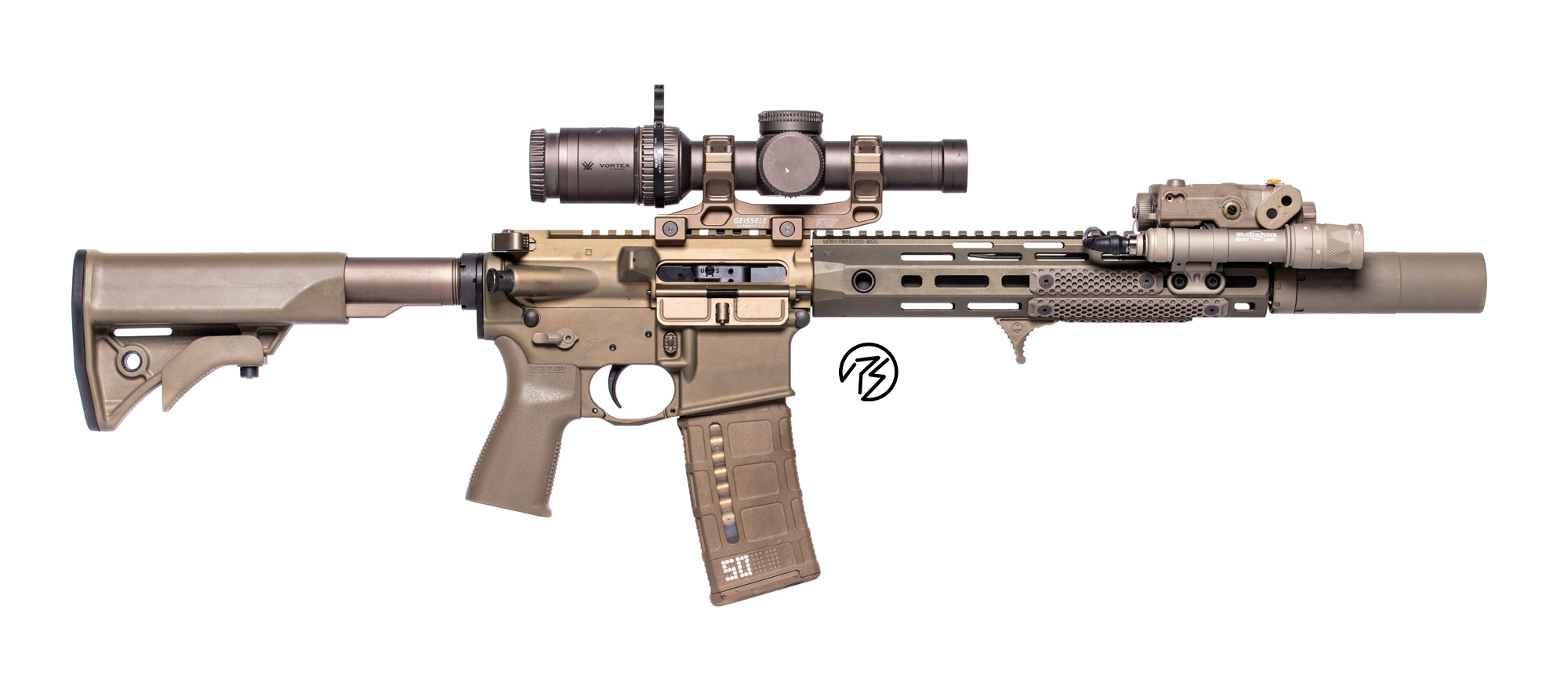
The original design, and arguably the more proven system, the DI system is commonly found in military service rifles as well as privately owned ARs. Through the DI system, propellant gas from the expended round is piped through a small hole in the barrel. This gas is channeled down a small tube and contacts the bolt carrier. The gas forces the bolt carrier to the back of the receiver, extracting and then ejecting the case in the process. The recoil spring then forces the bolt forward, stripping a new cartridge off of the magazine and chambering the round in preparation for the firing sequence.
The Gas Piston System
Interestingly, the first successful application of the gas piston system was Mikhail Kalashnikov's AK-47, considered by many to be the sole competitor to the AR-15 in terms of application, development, and widespread use.
Like the DI system, the gas piston system makes use of the propellant gasses that are forced down the rifle barrel. Instead of forcing the gas down a tube, however, the gas is contained inside of a separate cylinder. Within this cylinder is a piston. The piston is actuated by the gas, pushing the bolt carrier rearward, and starting the extraction and ejection process.
The Advantages of These Systems
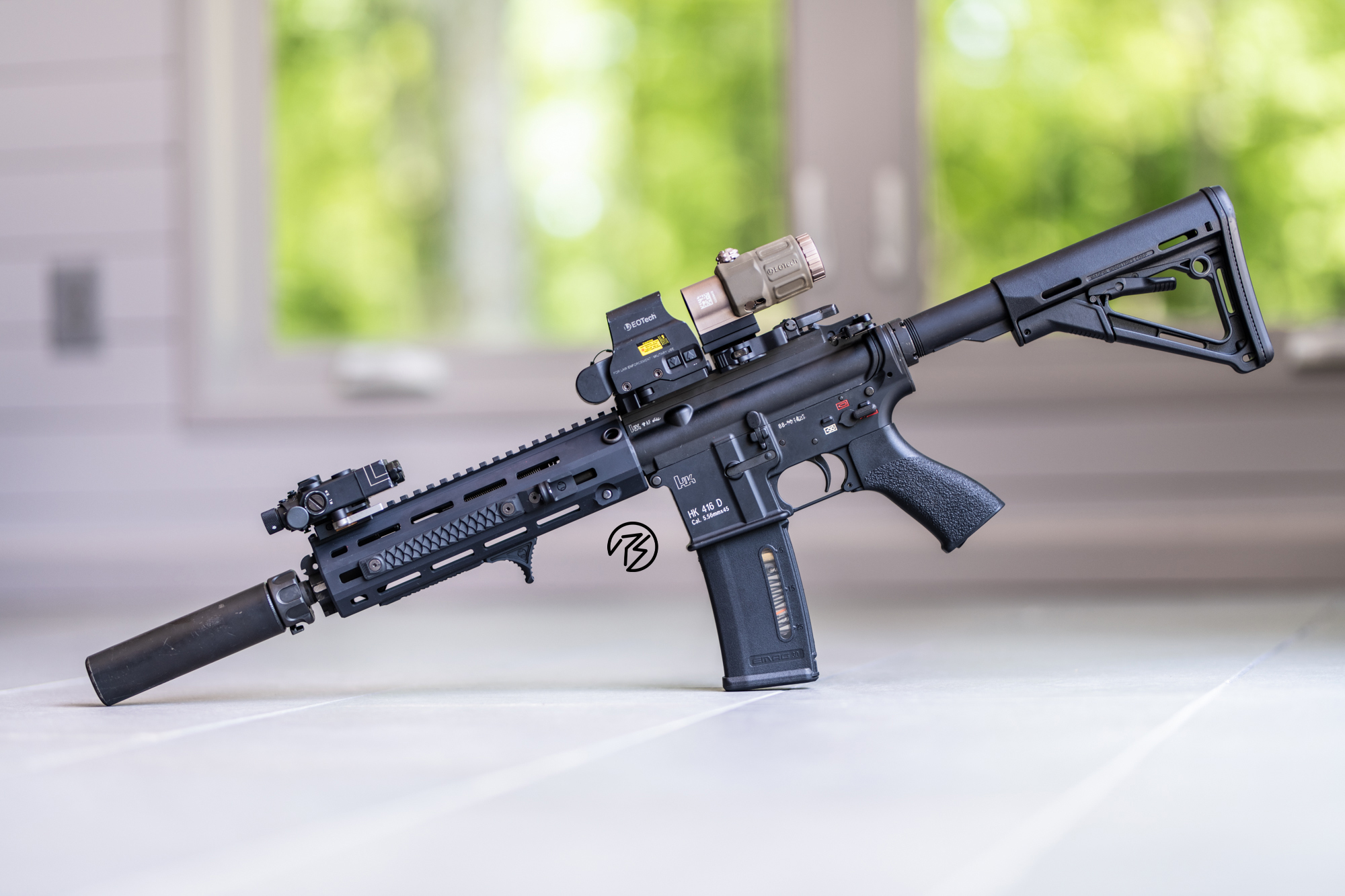
Objectively and subjectively, each of these systems have their own sets of advantages and disadvantages; comparing these pros and cons is going to be the best way to figure out which set is right for you: direct impingement vs piston.
DI Advantages
DI rifles enjoy greater accuracy. While this advantage relies mostly upon anecdotal evidence, users who rely on the DI system report that their rifles are more accurate than gas piston systems. The main argument here is that the design of the gas piston results in snappier recoil that can inhibit rapid follow-up shots. This recoil can also result in the bolt carrier moving within the receiver in a non-linear fashion, which can further affect your accuracy, whereas the DI system moves the bolt carrier forward and backward smoothly, limiting the recoil.
Additionally, DI rifles are more affordable and simpler to maintain. That’s in large part because of how common this style of operating system is. The standardized nature of the system means that parts from varying manufacturers tend to work together with some degree of consistency, even if the pairing is less than optimal.
Conversely, gas piston systems are often proprietary to a particular manufacturer. That means if your operating system should happen to get damaged or worn down over time, you won’t be able to make quick repairs at the range unless you have those particular branded parts on hand.
Gas Piston Advantages
The gas that moves within the DI system can heat up the bolt carrier group. So while the DI system may be more accurate, it also produces more heat, which can result in failures or operator injury. Gas piston rifles do not heat up nearly as quickly, which means that bolt carrier groups can be swapped quickly and easily during range days or competitions.
It also limits the wear and tear on your bolt carrier group (BCG), helping to lessen repair and replacement costs.
Not only do they keep cool under pressure, but they also stay cleaner longer. Gas piston AR-15s route the gas into the cylinder rather than porting into the interior of the rifle. In a DI rifle, the gas that’s pushed into the receiver leads to the rapid buildup of carbon on the BCG. A fouled BCG can lead to reliability issues like extraction and ejection problems. Gas piston rifles foul the BCG much more slowly, making clean up and maintenance are far easier.
So Which System is Best?
While we could take a side in this debate, the reality is that either system is effective and results in a great AR build. Instead of asking, “Which is best?,” instead ask “Which is best for you?” Depending on how you use your rifle and what your interests are, either system is a great choice for your next build.
For proven reliability, the DI system might be a better choice. But for a newer design that’s easier to maintain, the gas piston system is the way to go. Of course, if you just can’t make a decision, it’s not a bad idea to build out two upper receivers, one with each system. They can be used interchangeably with your lower receiver, allowing you flexibility and adaptivity to respond to your shooting needs.
Top-Tier AR Accessories and Parts
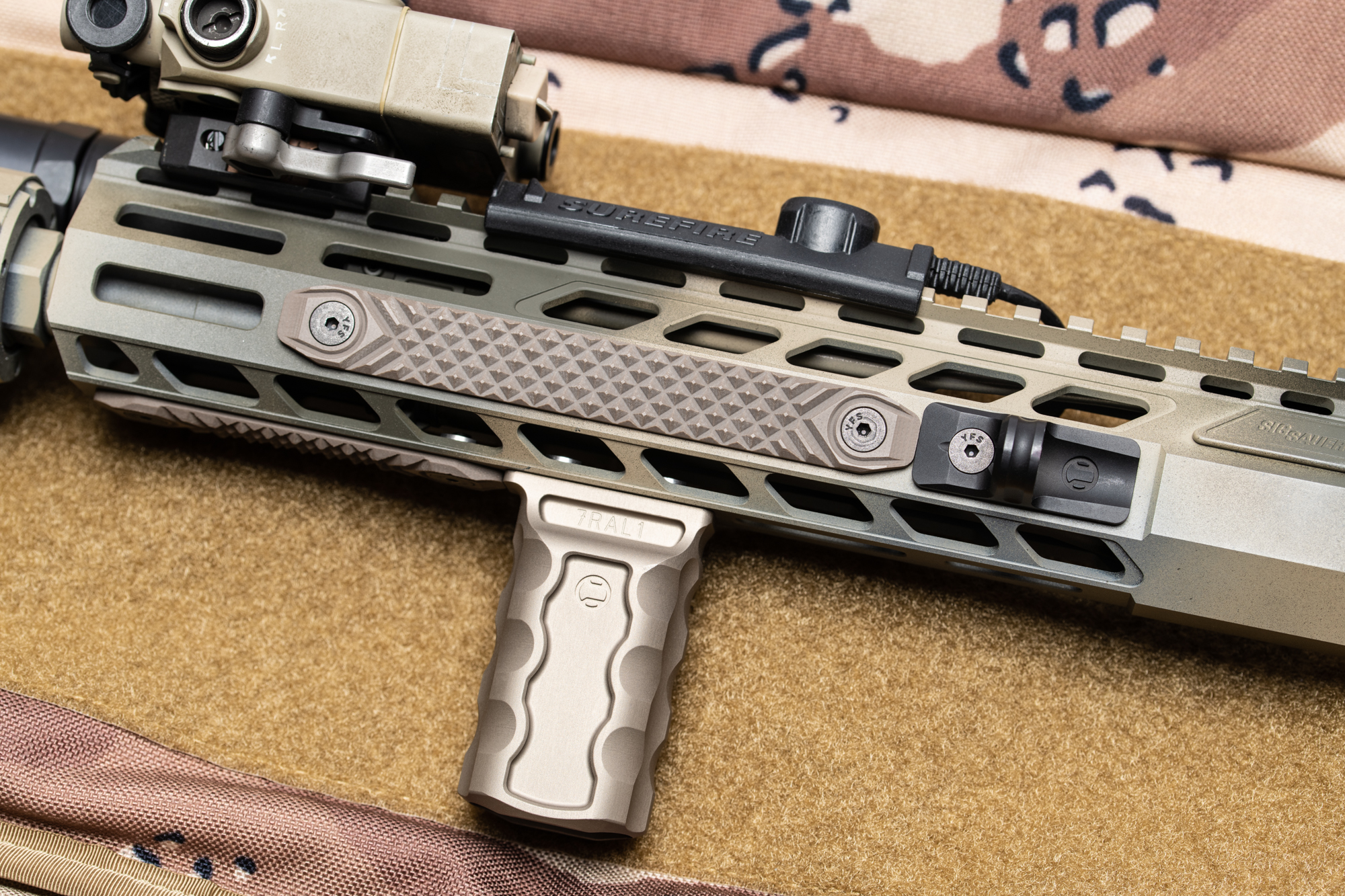
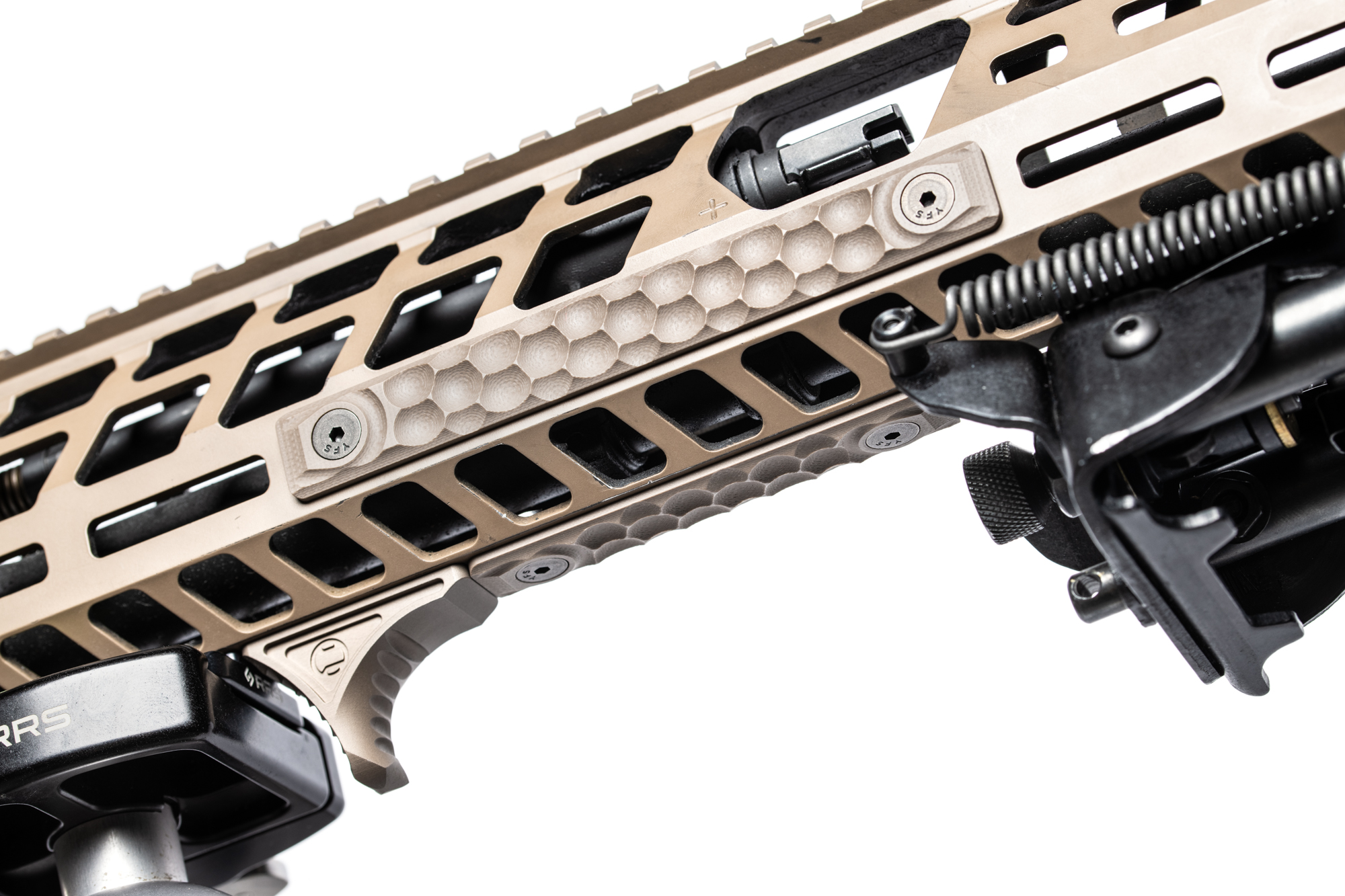
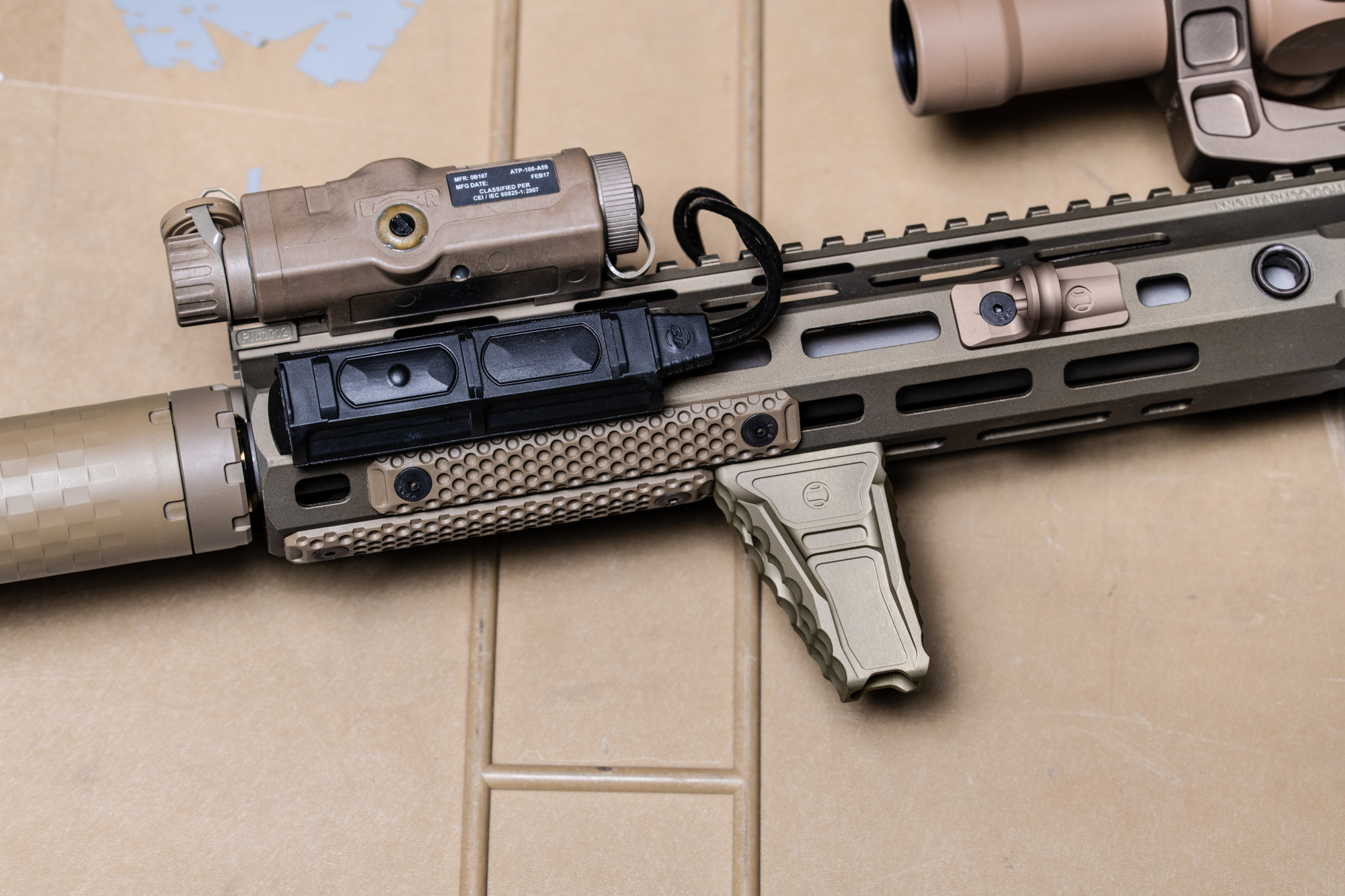
No matter what operating system you’re running, direct impingement vs gas piston, in your custom AR build, you’ll want to outfit the rest of your rifle with premium accessories and parts. Whether you use M-LOK or Keymod handguards, RailScales offers rail covers, forend grips, and handstops that fit your needs.
Made from high-quality materials, like G10, HTP, and aluminum, all of our products are rugged, reliable and look right at home on your rifle. Order our AR 15 accessories now!
Advanced Ergonomic Upgrades: Expanding Your Build Ecosystem
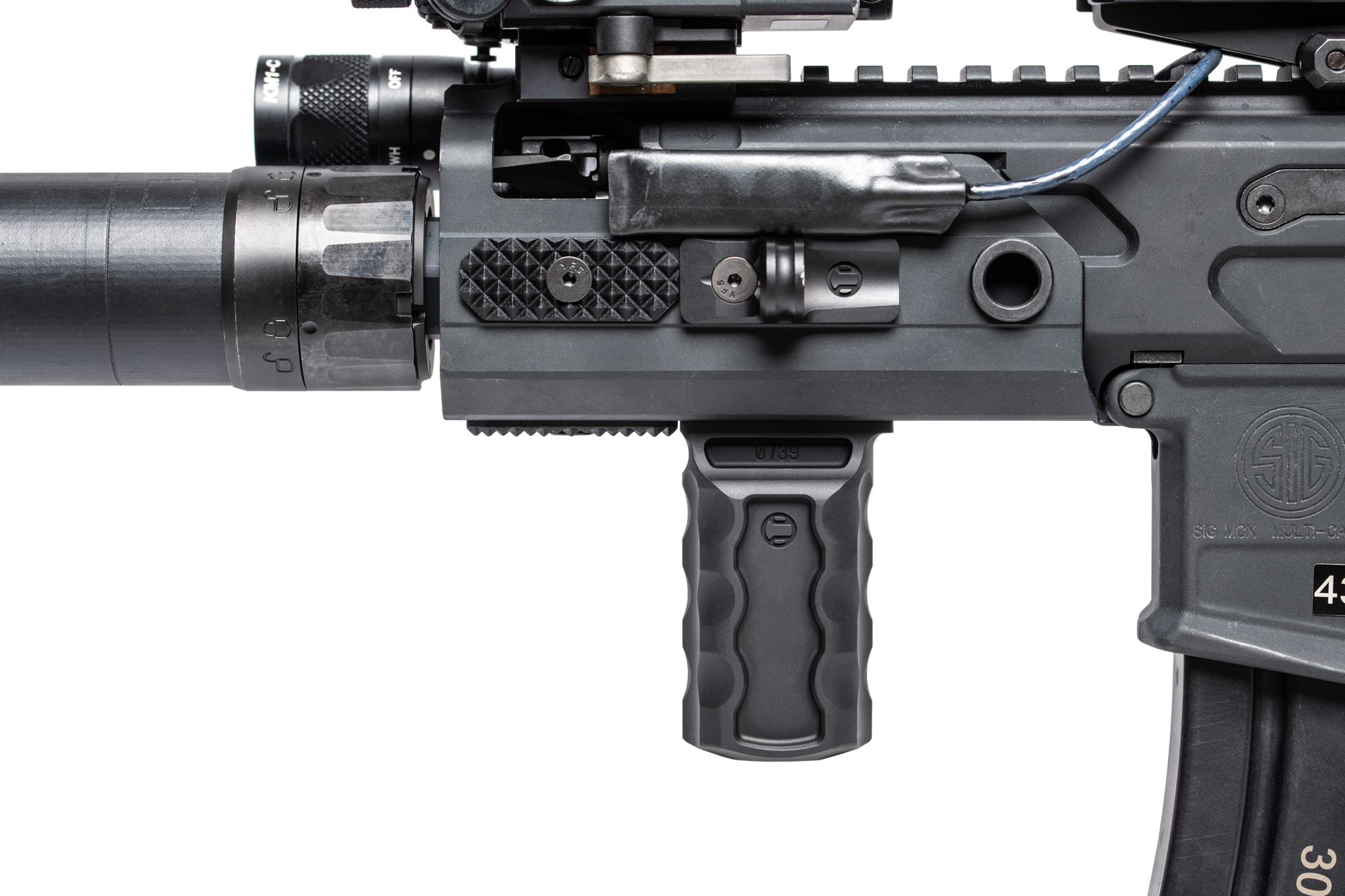
To extract maximum performance from either a hot-running DI system or a snappier gas piston rifle, your peripheral components must be engineered to provide total thermal control and rapid target transitions. RailScales® produces a suite of unmentioned, specialized tactical hardware designed to conquer these platform-specific challenges:
1. XOS™ & XOS-H™ 3-Sided Scale Matrix
While traditional panels defend individual sides of a handguard, the XOS™ series wraps three sides of the rail in a seamless, unified piece of machined G10 or High-Temp Polymer.
-
Enhanced Thermal Shielding: For direct impingement builds, the XOS™ shields the user's support hand from intense gas block radiation.
-
Integrated Controls: The XOS-H™ variant incorporates an elegant accessory cutout designed to seat a handstop flush with the scale pattern.
2. LEAF® Front Sight Integration
Top-rail real estate is a luxury when running modern weapon configurations. The LEAF® series mounts a low-profile, fixed backup iron sight directly onto the housing of your ATPIAL or DBAL laser module. This eliminates the standard folding front sight tower, clearing space on your handguard for tape switches or forward grip extensions.
3. CSMR®
Fumbling during low-light reloads or intense competition stages can ruin a split time. The CSMR® updates the standard mil-spec button with a deeply textured, enlarged surface machined from 6061-T6 aluminum. This yields clean, reliable engagement for your trigger finger without adding excessive lateral width to the lower receiver.
4. QDX™ M-LOK Sling Mount
Traditional multi-piece sling loops can rattle or pull loose under hard use. The QDX™ is a single-piece, ultra-low-profile sling attachment point that mounts nearly flush to any standard M-LOK handguard. Its geometry prevents sling twist and minimizes the snag footprint for clean, uninhibited rifle carry.
Frequently Asked Questions (FAQ)
Q: Do direct impingement (DI) rifles really require more cleaning? A: Yes. Because a DI system vents high-pressure gas directly into the bolt carrier group inside the receiver, it causes carbon fouling to accumulate much faster than a gas piston setup, which vents gas externally inside a separate cylinder.
Q: Will a gas piston upper fit onto my standard AR-15 lower receiver? A: Yes. Standard AR-15 lower receivers are fully compatible with both DI uppers and self-contained gas piston uppers, meaning you can swap back and forth to match your specific shooting application.
Q: Why are G10 material panels preferred over standard plastic rail covers? A: G10 (woven fiberglass with epoxy resin) features extremely low thermal conductivity and zero tendency to warp or melt under sustained automatic or rapid firing, making it a professional-grade solution for protecting hands from gas block heat.
Q: What is the primary operational difference between the Karve® and an angled forward grip like the LDAG®?A: The Karve® is an ultra-minimalist handstop meant for a C-clamp indexing point, while the LDAG® is a fuller, multi-angle machined grip that offers alternative directional leverage points for aggressive muzzle control.