
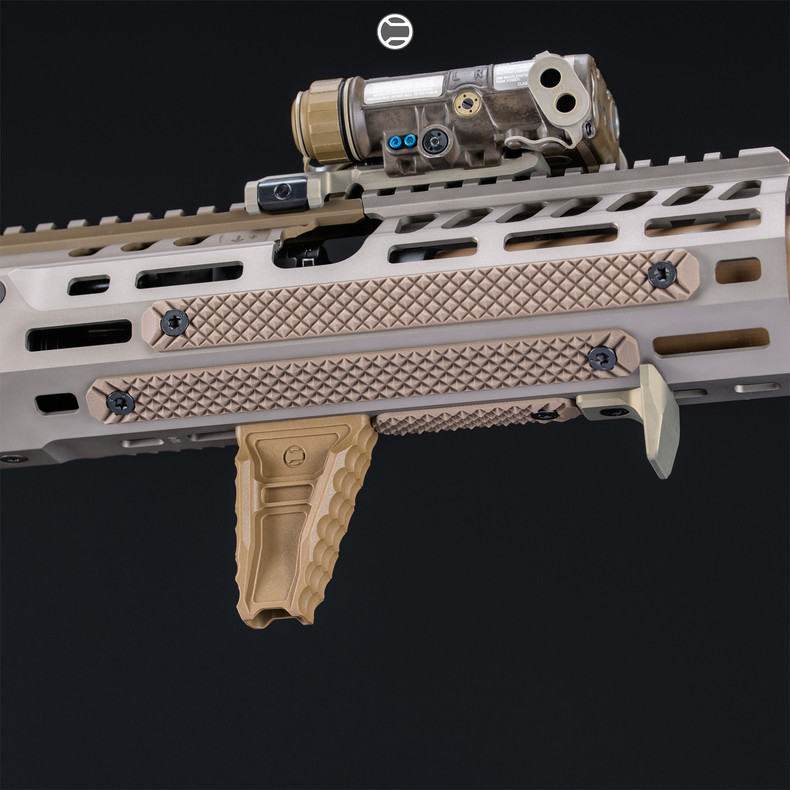
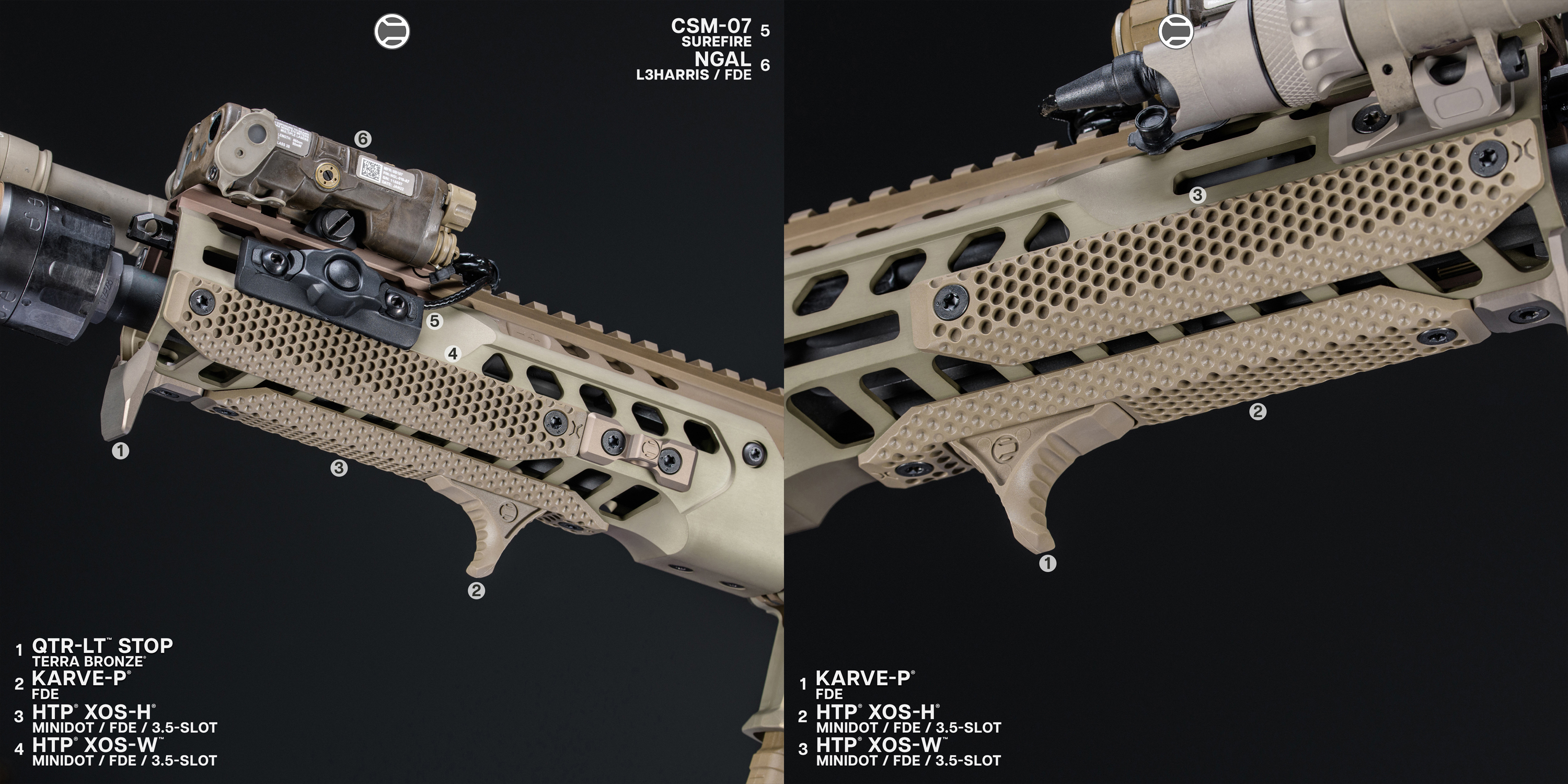
When outfitting an AR-15, the upper rail or handguard acts as the critical foundation for your entire accessory ecosystem. However, not all rails are created equal. Choosing a low-quality, out-of-spec, or obsolete handguard can lead to slipping attachments, damaged gear, and severe compatibility roadblocks. Understanding why rail compatibility matters when choosing an AR-15 handguard is essential to avoid wasting money on handguards that fail in the field.
AR-15 Rails That Create Accessory Compatibility Problems
Not all AR-15 handguards are created equal—cheap knockoffs, outdated mounting systems, and poorly manufactured rails can lead to compatibility issues, weak attachment, and reduced reliability. Learn what separates a high-quality, spec-compliant M-LOK rail from the junk, plus how RailScales® accessories can enhance grip, heat protection, and modularity.
Cheap Counterfeits & "Gun Show Special" Knockoffs
• The Low-Hanging Fruit Trap: One of the biggest pitfalls on the market is cheap, unbranded, or counterfeit rails sourced directly from overseas platforms or sold at local gun shows. These manufacturers exploit buyers looking for a bargain, hoping customers will treat a cheap purchase as low-hanging fruit and simply swallow the cost when the rail turns out to be unusable.
• Wildly Inconsistent Specifications: These imitation rails routinely skip quality control, resulting in internal and external dimensions that are completely all over the place. M-LOK slots are frequently cut too narrow, too wide, or with irregular wall thicknesses, making it impossible for standard M-LOK T-nuts to rotate, lock, or stay torque-spec tight under recoil.
• Subpar Structural Integrity: Sourced from low-grade pot metals or recycled aluminum, these knockoffs strip out easily at the barrel nut threads and deform under basic clamp pressure, posing a severe safety and reliability hazard to your entire upper receiver.
Outdated & Proprietary Systems
• Outdated KeyMod Systems: While KeyMod enjoyed a brief period of popularity, the modern firearm industry has overwhelmingly standardized around M-LOK and traditional 1913 Picatinny rails. Opting for a KeyMod handguard significantly limits your accessory options, as many manufacturers have phased out or reduced support for KeyMod-specific hardware.
• Proprietary Commercial Mounting Systems: Avoid handguards that utilize non-standard, proprietary mounting slots instead of true open-source M-LOK specifications. Proprietary systems lock you into a single brand’s limited product line and lack compatibility with industry-standard rail covers, light mounts, and forward controls.
Signs of a Low-Quality Rail System
• Weak Attachment & Anti-Rotation Features: The worst upper rails lack robust barrel nut locks or anti-rotation tabs. Under hard operational use or barricade bracing, a rail without anti-rotation features can twist off center, misaligning your front sights and top-rail lasers.
• Sharp Edges & Poor Surface Finishing: Cheaply manufactured rails often skip necessary deburring steps. Sharp, unrefined edges on M-LOK slots or Picatinny teeth will cut into bare hands, shred gloves, and damage sling webbing.
• Thermal Trapping & Heavy Profiles: Poorly engineered rails lack adequate venting, trapping barrel heat directly under your support hand while adding unnecessary bulk to the front end of the rifle.
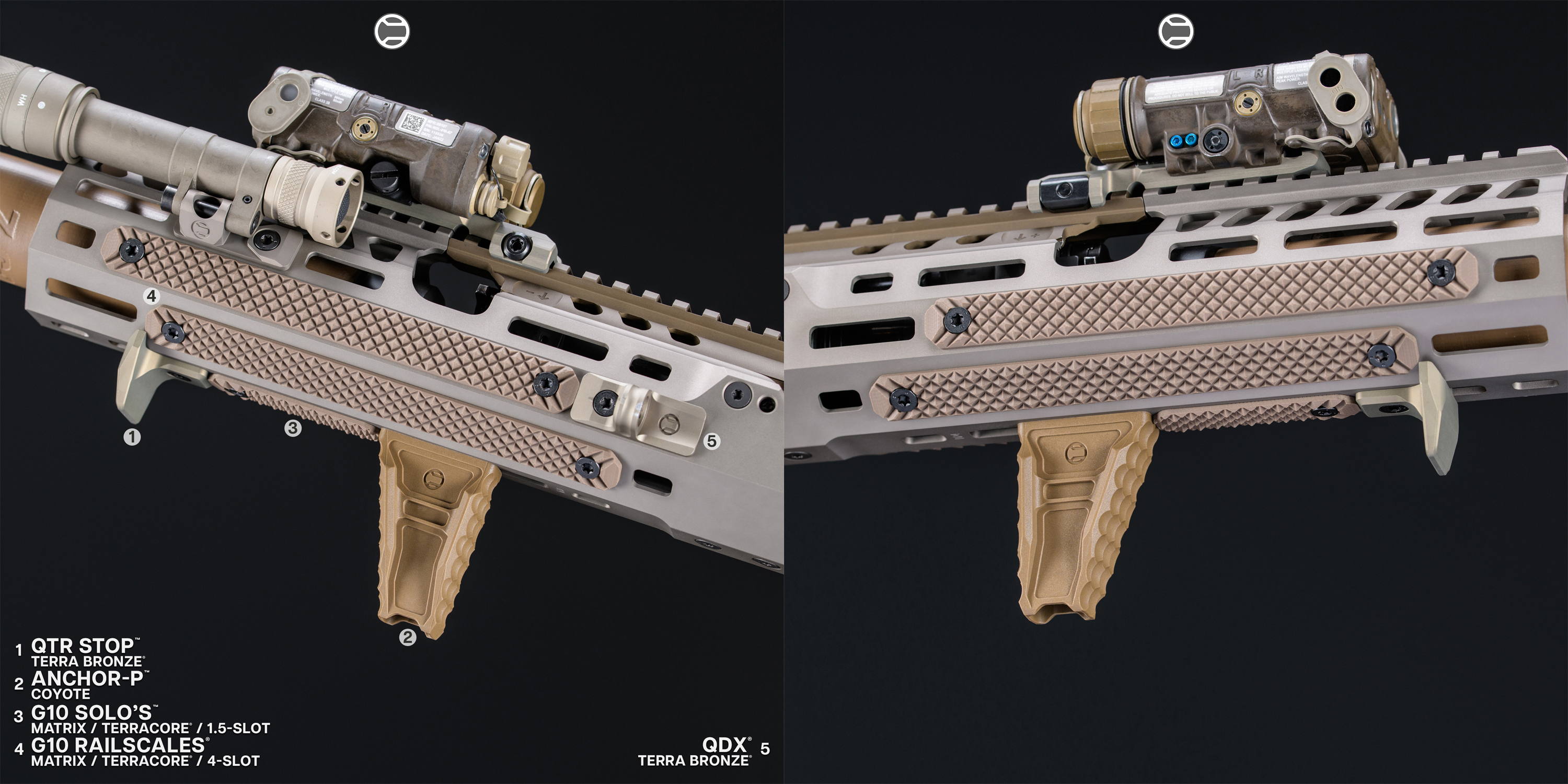
What to Look For in a High-Quality AR-15 Rail
To ensure seamless accessory compatibility and long-term durability, select handguards that meet strict industry standards:
• True M-LOK Specification: Choose rails built strictly to Magpul's open-source M-LOK parameters, constructed from forged or extruded 6061-T6 or 7075-T6 aluminum.
• Precise Anti-Rotation Alignment: Ensure the rail utilizes integrated anti-rotation tabs that lock tightly against the upper receiver.
• Hardcoat Anodizing: Look for Type III Class 2 hardcoat anodized finishes that protect against corrosion, abrasion, and harsh environmental wear.
Comprehensive RailScales® Product Ecosystem
Once you have paired your upper build with a high-quality, spec-compliant M-LOK or Picatinny handguard, RailScales® produces a complete ecosystem of American-made hardware designed to maximize control, thermal insulation, and modular flexibility:
Thermal Insulation & Surface Scale Matrices
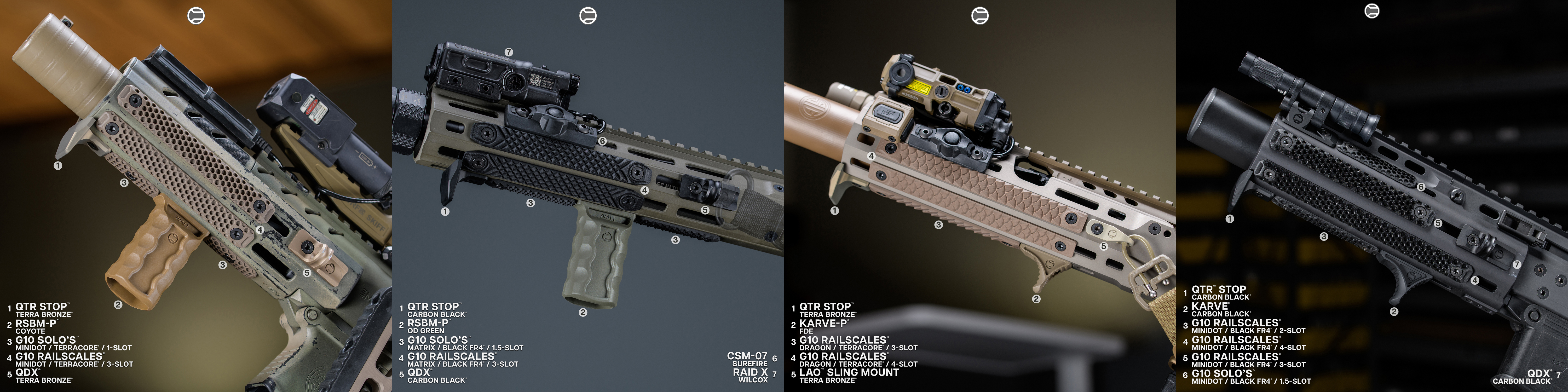
• G10 RailScales®: Machined from high-pressure FR4 fiberglass laminate, these patented panels drop into spec-compliant M-LOK slots, offering superior heat mitigation and non-slip textures (Honeycomb, Dragon, Matrix, and MiniDot).
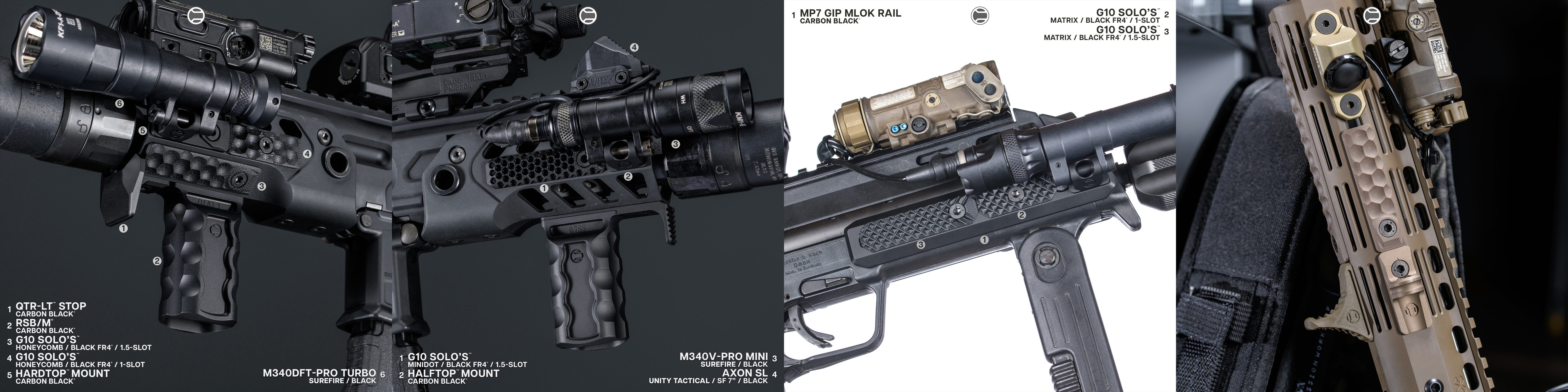
• G10 Solo's™: Single-slot M-LOK panels engineered specifically for ultra-short handguards on sub-guns, PCCs, and compact AR pistols.
• HTP® NIR™ Scales: Injection-molded from High-Temperature Polymer, these lightweight panels deliver cost-effective heat protection. The NIR™ variants feature specialized additives to absorb IR light, keeping your rifle dark under night vision.
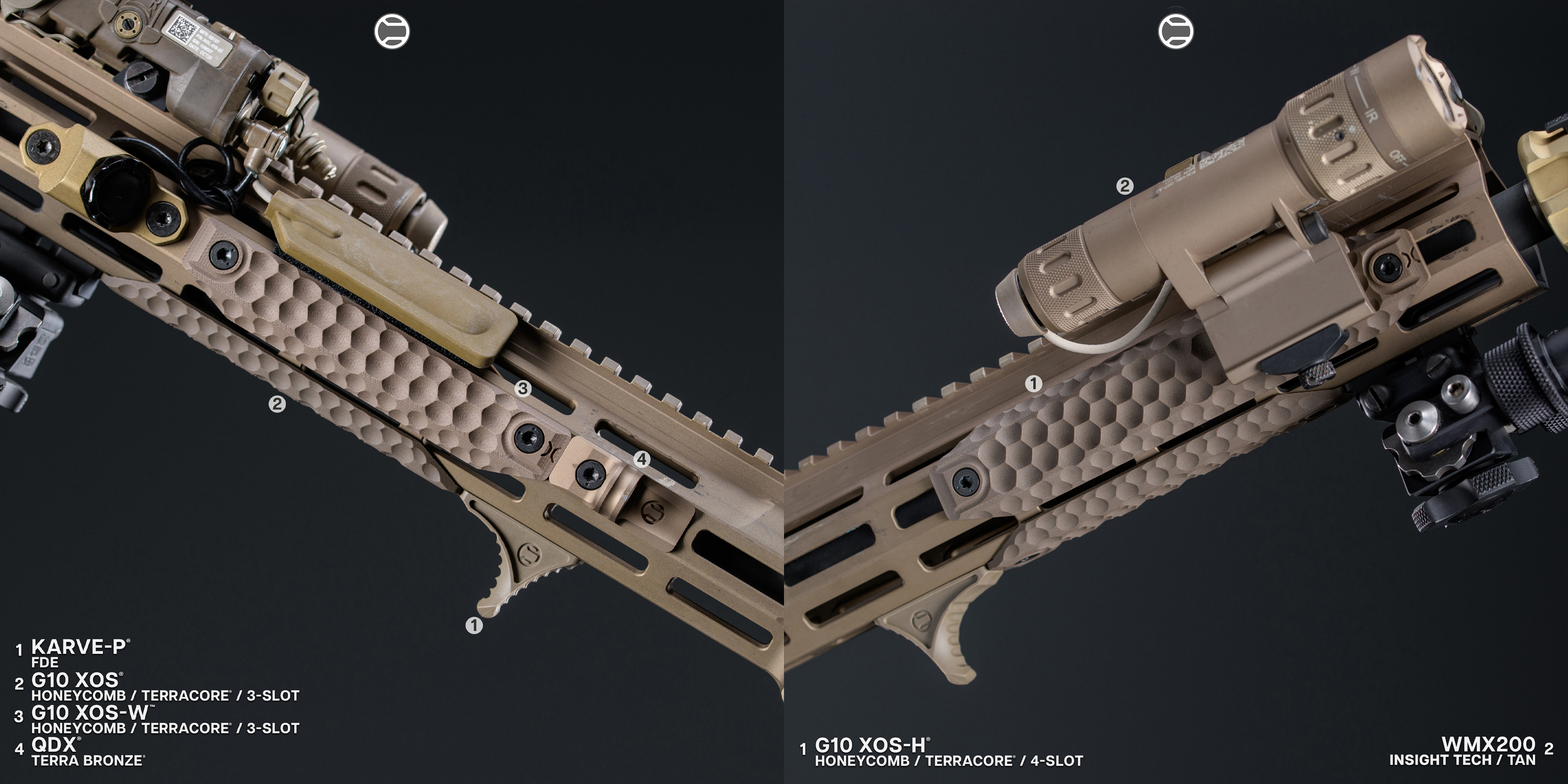
• XOS® 3-Sided Wraparound Scales: Featuring 135-degree wings, XOS® panels wrap around three sides of your rail to double the grip surface and deliver maximum thermal shielding.
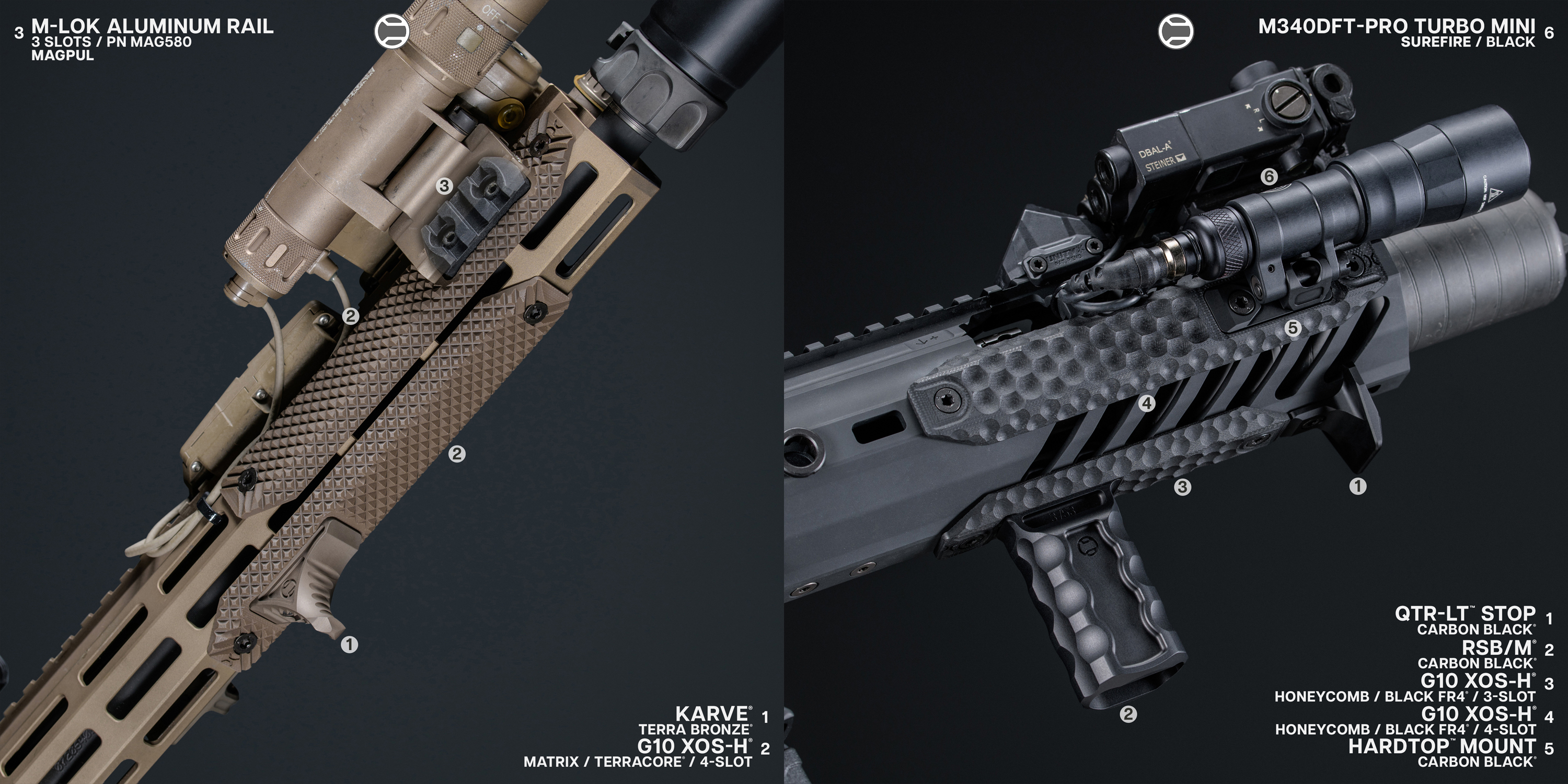
• XOS-H® Nested Accessory Scales: Designed with a precision cutout, XOS-H® panels allow controls like the Karve®, Anchor-P™, or QDX™ to sit completely flush within the texture matrix for a seamless interface.
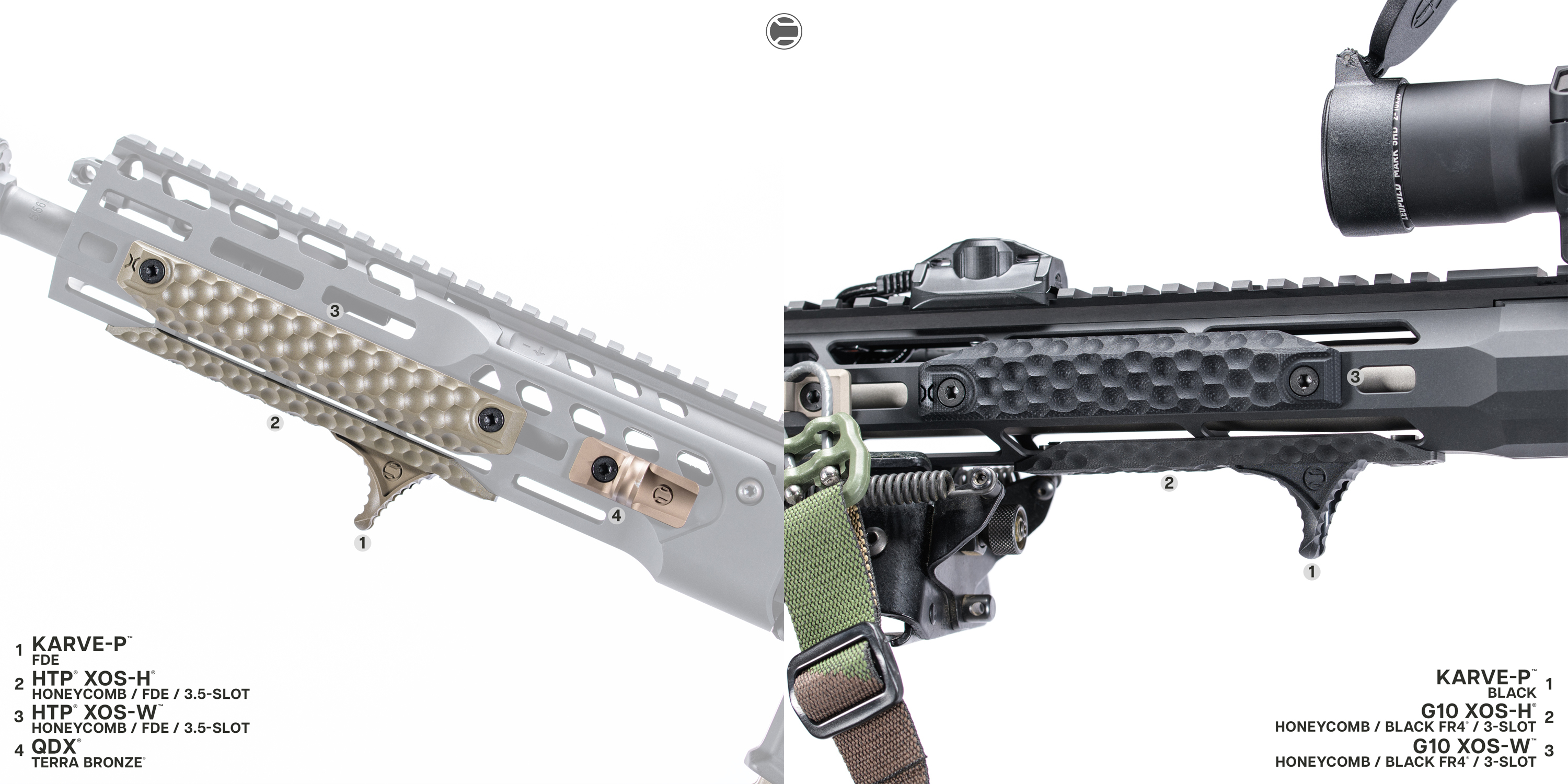
• XOS-W® 2-Sided Scales: Built with a single 135-degree wing, XOS-W® 2 sided scales protect the side and bottom of your rail while leaving the upper 45-degree angle open for light mounts and tape switches.
Forward Controls & Indexing Devices
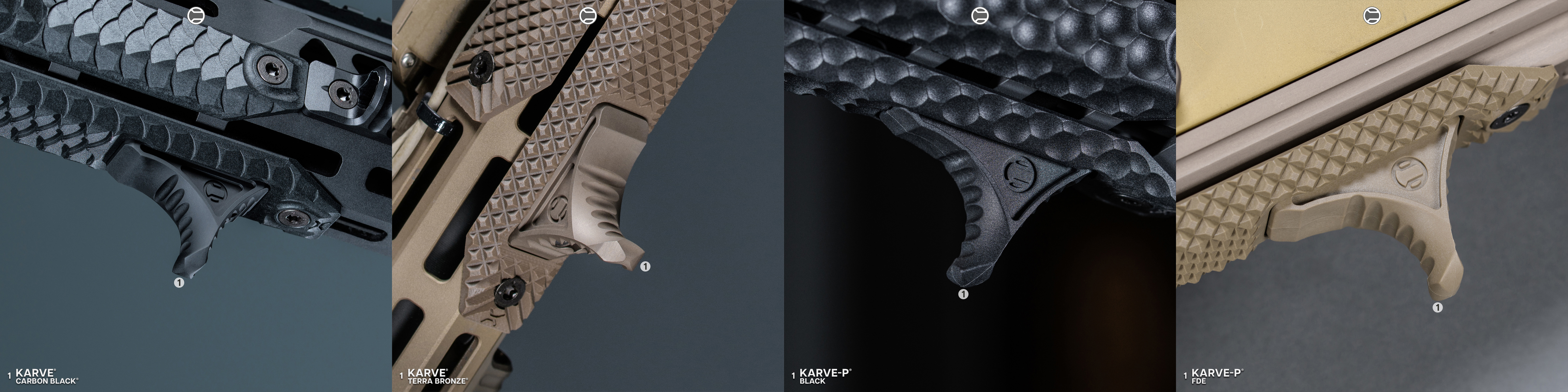
• The Karve® & Karve-P®: Compact bi-directional handstops machined from 6061-T6 aluminum (Karve®) or High-Temp Polymer (Karve-P®) that populate a single slot to lock your hand into a repeatable C-clamp grip.
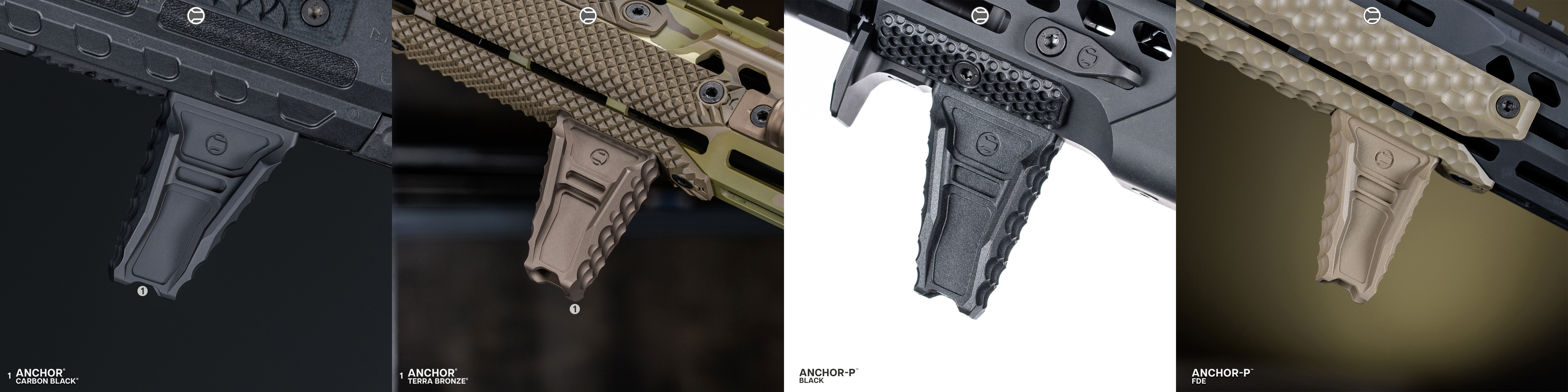
• The Anchor® & Anchor-P™: Reversible multi-angle hybrid foregrips featuring 90-degree vertical and 70-degree angled faces, offered in CNC aluminum (Anchor®) or High-Temp Polymer (Anchor-P™).
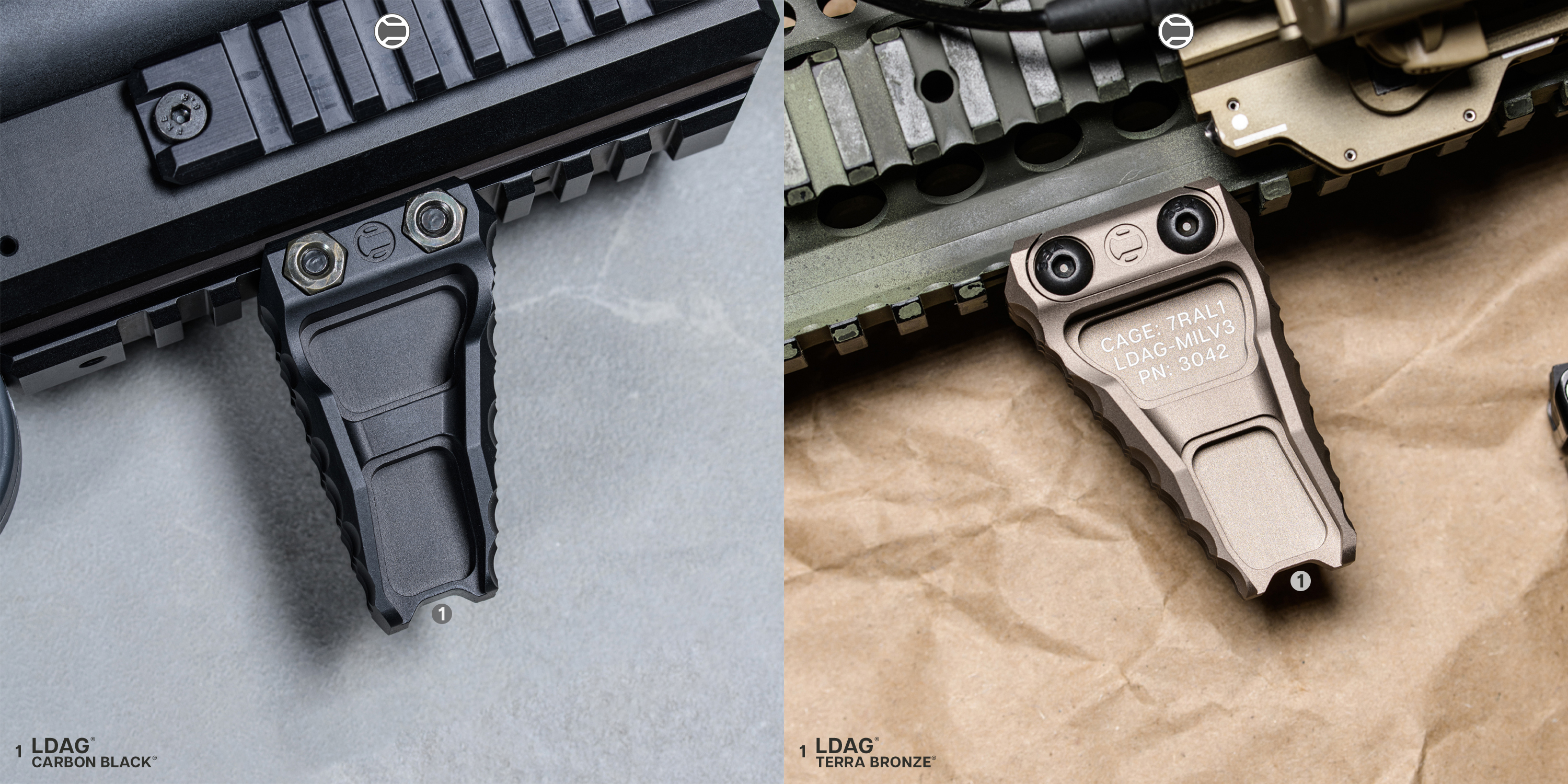
• LDAG®: Designed specifically for Picatinny rails, the LDAG® occupies 4 cross slots and delivers 70-degree and 90-degree stance options with signature honeycomb texturing.
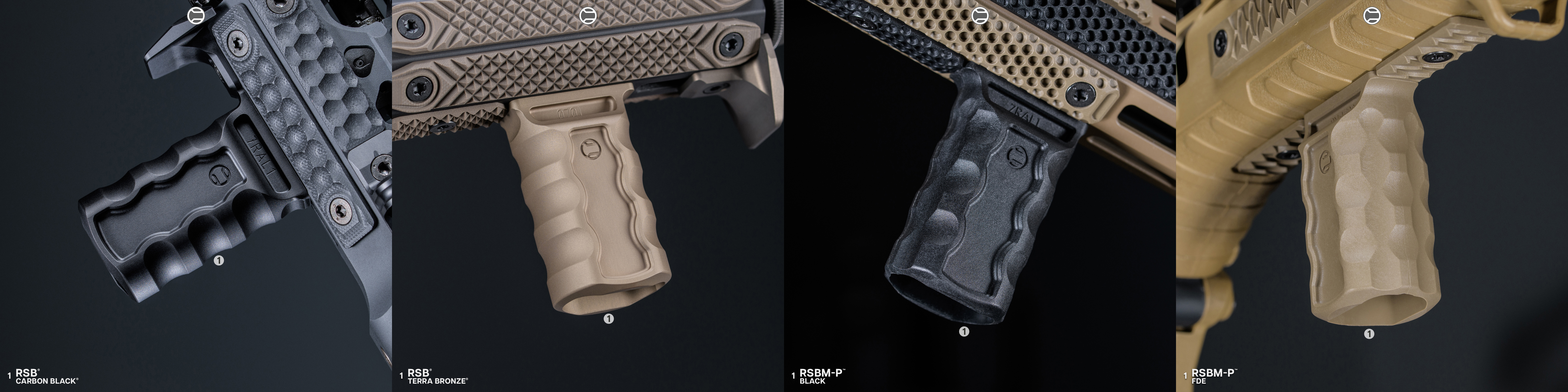
• RSB® & RSBM-P™: Shortened, hollowed vertical foregrips available in aluminum (RSB®) or polymer (RSBM-P™) that maximize rearward leverage without vertical bulk.
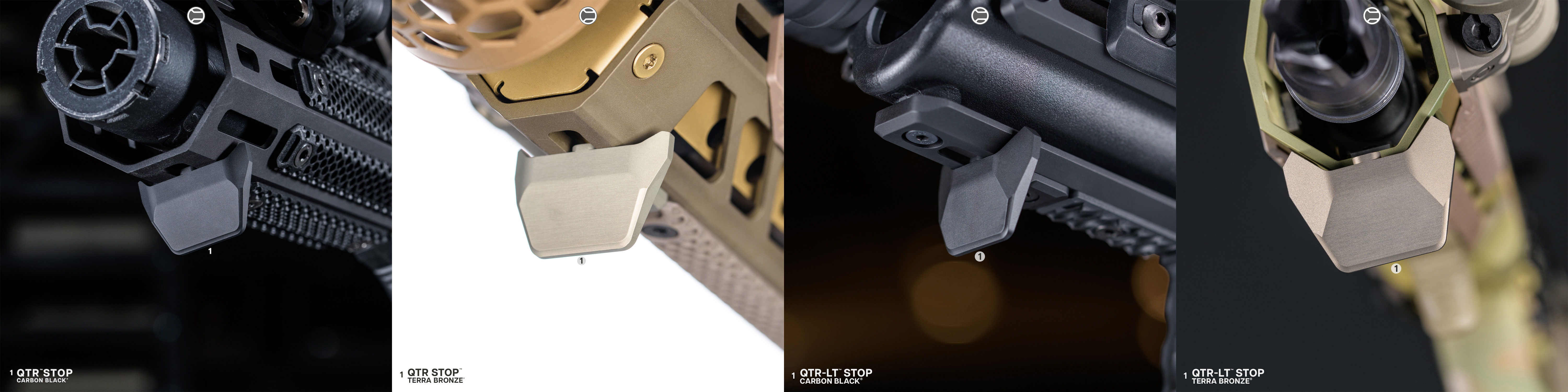
• QTR™ & QTR-LT™ Barrier Stops: Heavy-duty indexing stops designed for barricade bracing and positive muzzle control.
Picatinny Adapters, Light Mounts & Sling Attachments
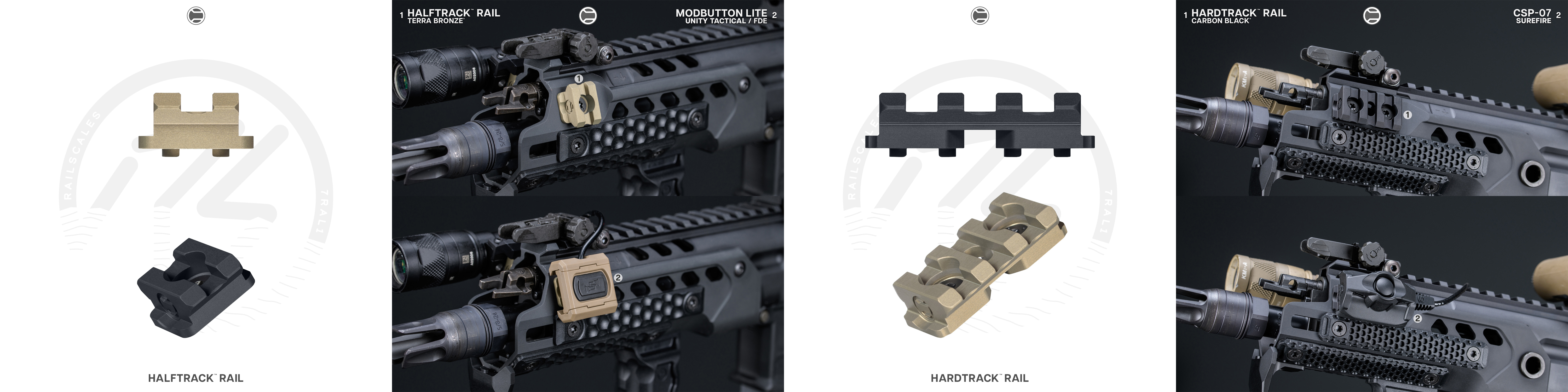
• HalfTrack™ & HardTrack™ Rails: High-efficiency Picatinny adapters featuring internal pocketing. The HalfTrack™ (1/2 slot) and HardTrack™ provide lightweight bases for bipods and night-vision lasers like the PEQ-15. Both stack flush inside XOS-H® scale cutouts.
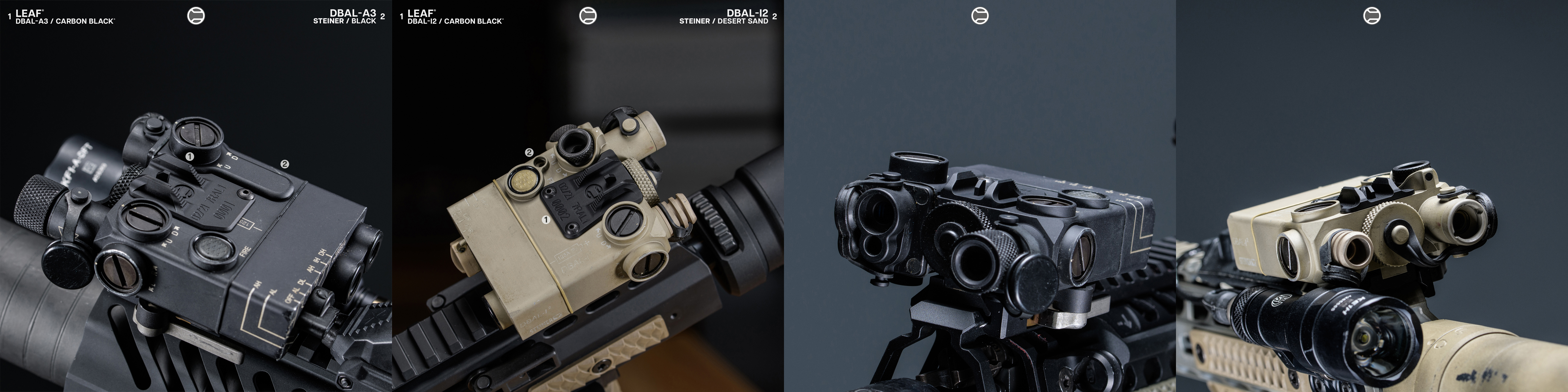
• LEAF® Fixed Sights: Ultra-low-profile front iron sights that bolt directly onto the top housing of DBAL or PEQ-15 laser units, saving top Picatinny rail space.
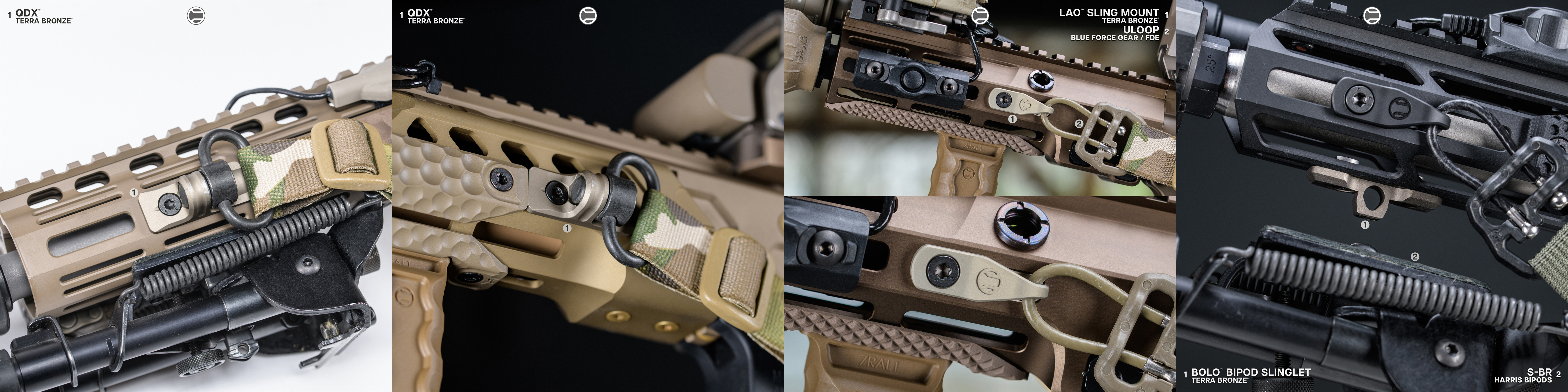
• QDX®, LAO™, & BOLO™ Sling Interfaces: Low-profile 7075-T6 aluminum sling mounts (QDX® and LAO™) and bipod slinglets (BOLO™) that sit flush to prevent snagging.
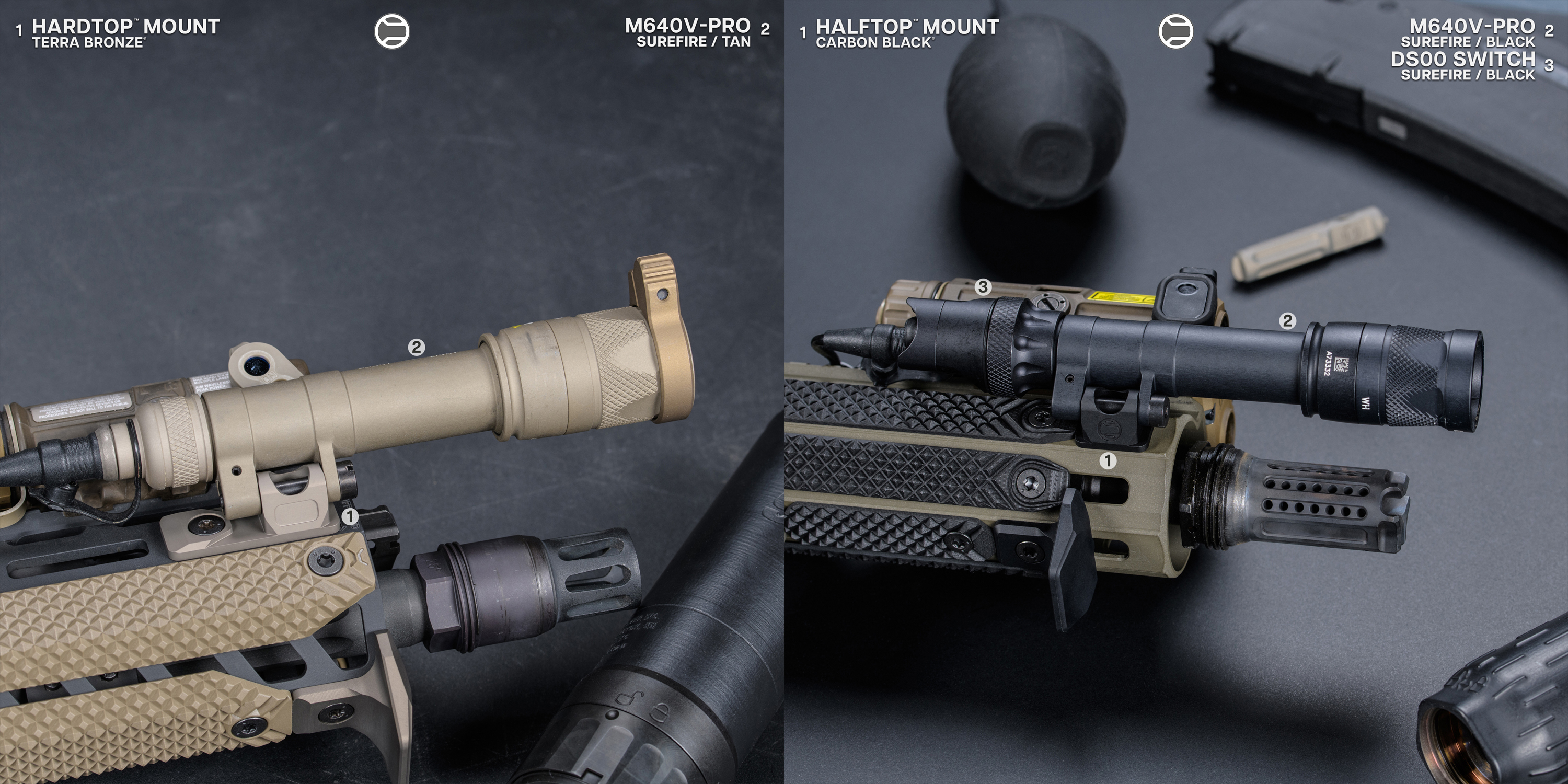
• Scout Pro Hardtop™ & Halftop™ Light Mounts: Direct-attach illumination mounts engineered to tuck tactical weapon lights tight against the handguard geometry.
Frequently Asked Questions About Out-Date Upper Rails (FAQ)
Q: Why are gun show knockoff rails so cheap compared to name-brand M-LOK handguards?
A: Counterfeiters cut costs by using inferior aluminum alloys, skipping heat treatment, omitting deburring/anodizing processes, and ignoring official M-LOK dimensional tolerances. They rely on low price points to lure buyers into writing off the loss when the rail fails.
Q: What is the primary difference between XOS® and XOS-H® scales?
A: Standard XOS® scales provide a continuous 3-sided wrap for maximum thermal coverage. XOS-H® scales include a standardized center cutout that allows accessories like the Karve®, Anchor-P™, HalfTrack™, or QDX® to mount flush inside the scale.
Q: Why do M-LOK T-nuts strip out or fail to tighten on cheap rails?
A: Out-of-spec rails often feature M-LOK wall thicknesses that are either too thick or too thin. If the inner wall is out of spec, the T-nut cannot catch the shoulder to rotate 90 degrees properly, leading to loose hardware or stripped threads.
Q: What is the benefit of using an M-LOK rail over a full Picatinny quad rail?
A: M-LOK rails are significantly slimmer, smoother, and lighter than traditional quad rails. They allow you to mount accessories only where you need them while leaving the rest of the handguard smooth and comfortable for your support hand.
Disclaimer:
This blog content was generated by a human and with the aid of artificial intelligence. It may contain errors or inaccuracies and should not be relied upon as a substitute for professional advice. This content is for SEO/entertainment purposes only and the views expressed in this content does not necessarily reflect the views of RailScales LLC. For more information, please refer to bullet point #14 on our FAQ.